My husband and I keep secrets from each other.
Before you close this tab… hear me out.
Not secrets about our finances. Not secrets about our goals, our marriage, our shared life. Those belong to us. What I’m talking about is something different, and honestly, something I think a lot of people get completely backwards.
There’s a real difference between hiding something FROM your partner and holding something FOR your friend.
And today I want to make the case that knowing the difference is one of the most underrated things you can do for your friendships, your community, and, maybe surprisingly, your marriage.
The Internet’s Hot Take (And Why I Disagree)
You’ve seen it. The posts that say: if your friend told you, your partner gets to know too. That’s just how marriage works.
I hear the logic. Partnerships are built on openness. You’re a team. No secrets.
But here’s what that framing gets wrong: it assumes the information is yours to share. It isn’t. Your friend’s story, told to you in confidence, does not belong to your marriage. It belongs to your friend.
When we collapse that distinction, when we treat “my partner and I tell each other everything” as the gold standard of a healthy relationship, we are doing it at the direct expense of our friends’ trust. And most of the time, we don’t even realize it.
This is my hot take. I’m planting my flag here.
The Three Categories
When I sat down to actually think through how Michael and I handle this, I realized there are three distinct categories of things I don’t share with him about our friends.
Category 1: They asked me not to.
A friend tells me something and says, please don’t tell Michael. That’s it. Full stop. I don’t tell him.
And I mean it. If Michael asks me something later that would reveal what I know, I’ll say I haven’t talked to them about that recently. Or I’ll just say: I don’t want to talk about it. That’s become a kind of shorthand between us. He knows not to push, not to ask around, not to dig. If that friend wants to tell him, they will. Otherwise, it’s not his to know.
Category 2: They didn’t ask, but I know.
This one requires more judgment, and honestly, it’s where I think most people fall short.
A few years ago, a close friend and I went on a two-hour walk. She was going through a divorce. Michael knew I was on that walk, knew who I was with, knew why. He’s friends with her too. She didn’t explicitly say don’t tell Michael. But by the end of that walk, I was sitting in my car thinking about everything she’d shared, the things she’d been carrying for years, the details about what had actually happened, what the future looked like for her, and I just knew. This isn’t mine to hand over.
I got home. He asked how the walk was. I told him it was intense, that a lot had been going on that we didn’t know about, and that I was really glad we could be there for her.
That’s all he got from two hours of conversation. Because I was holding it for her, not hiding it from him.
Category 3: It’s not my news to share.
A close friend texted me and another friend to say she was pregnant. She was overjoyed. So were we. She said not to tell anyone yet.
Now, Michael has been friends with her longer than I have. He would have been genuinely thrilled to hear this news. And I thought about it… and then I thought about what it would look like for them to have that moment together. Him finding out from her, not from me. That joy, that reaction, that conversation. It belonged to them as friends. I didn’t want to be the one to take it.
So I didn’t say a word. And when she eventually told him, I got to hear about his reaction secondhand, and it was exactly as good as I hoped.
The Cost of Carrying It
Listen to the full episode for the part of this conversation I almost didn’t say out loud, about what it actually feels like to carry heavy things alone, and why I do it anyway.
I want to be honest about something: this is not free.
Sometimes I am carrying really heavy things. Illnesses. Past traumas. Friends going through their hardest moments. And I’m carrying them alone, because I’ve promised not to share. There are times I want to cry about something I know about a friend, not because it’s happening to me, but because I hate that it’s happening to them, and I can’t even talk about it with the person I talk to about everything.
That is a cost. I’m not going to pretend it isn’t.
But it’s a cost I choose. Every time. Because what’s on the other side of that choice is a friendship where someone actually feels safe. Where they know, without having to ask, that what they tell me stays with me. That’s not a small thing.
What Michael Thinks About All This
Honestly? He agrees.
(If you want to hear us actually talk through our philosophy on this together, go back to Episode 2. It’s the very first guest episode I ever recorded, and it still holds up.)
The reason this works in our marriage is because we share a core belief: our individual friendships make our marriage stronger, not weaker. When we each have people we can turn to, when we each have support systems that exist outside of each other, we show up better for one another. We’re not trying to be everything for each other. We’re trying to be part of a bigger web.
And maintaining that web sometimes means holding things tightly. Even from each other.
Michael has done the same for me. I can think of a friend of his who told him something months before I found out… something significant, something he carried completely alone. When it finally came out in a wider group, I had a genuine reaction. I was surprised. And our friend looked at him like, wait, you really didn’t tell her?
He really didn’t.
That’s the vault. That’s what we’re trying to be.
Why the Mechanics Actually Back This Up
Here’s a layer to this that I find genuinely useful to think about.
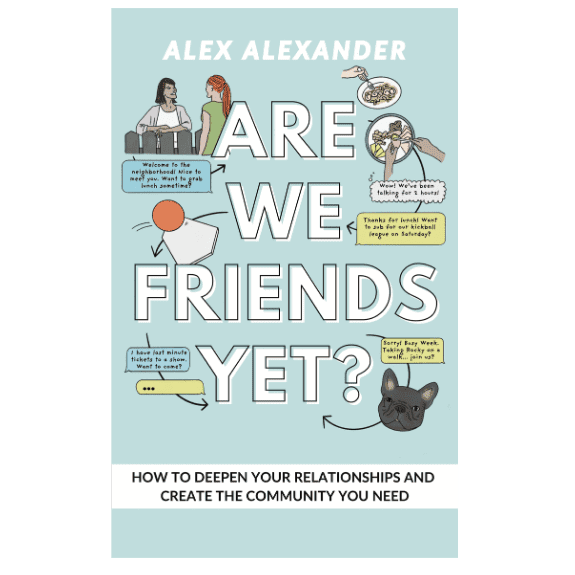
If a friend shares something with me, it’s because of the roots we’ve built together: the emotional intimacy, the shared history, the accumulated evidence that I will show up for them. (If you want to go deeper on this, Episode 12 is the full breakdown of my Roots of Friendship framework.)
Michael might be their familiar friend or their defined friend. Someone they like, someone they see at parties, someone they’re genuinely warm with. But he doesn’t have the same roots. The same depth. The same evidence.
So when I come home and hand him everything my friend just told me in confidence, I’m essentially making a decision on their behalf: I’ve decided Michael has earned this information. But that’s not my call. They didn’t build those roots with him. They built them with me.
The Wheel of Connection framework maps this really clearly, different people in our lives occupy different rings, with different levels of intimacy and trust, and information shared in one ring doesn’t automatically belong in another. (Episode 100is the full Wheel of Connection breakdown, and the most complete version of this framework is in my book.)
When a friend gets upset that you shared something with your partner, it’s often not irrational. It’s this exact dynamic playing out. I don’t really know your partner. I wasn’t sharing with them. I was sharing with you.
The Trust Ripple
Something I’ve noticed over years of doing this: trust spreads.
When people in your circle start to realize you’re someone who actually keeps confidences, not just in theory, but in practice, even from your own partner, the way they interact with you shifts. They tell you more. They trust you faster. They feel safer.
This happened literally last night. A friend asked about some news that had come out in our group, and I mentioned I’d known for about six months. The reaction was immediate: wait, you’ve known for SIX MONTHS? How did we not know you knew?
And I think what they were actually processing in that moment wasn’t frustration. It was something more like relief. Oh. She’s actually a vault.
That is what you’re building when you hold things for your friends. Not just one friendship. A reputation. A culture. A web of people who know that when they tell you something, it stays.
This Isn’t Just About Marriage
I want to be clear about something before I close.
I’ve focused this episode on partners and spouses because that’s where I see the most permission-giving happening.vWell, they’re my spouse, so of course I tell them everything. But this applies everywhere.
Friend groups. Trios. Community organizations. Anywhere there’s a web of people who know each other and share things at different levels.
If your friend tells you something in a group of three, and the third person didn’t hear it… it’s not yours to fill them in. If a mutual friend shares something with you that they haven’t shared with the group, it’s not yours to surface at the next dinner.
Holding something for a friend is not the same as hiding something from someone else. The first is an act of loyalty. The second implies you owe that person the information, and most of the time, you don’t.
The Hot Take, Summarized
Keeping a friend’s secret from your partner is not a betrayal of your marriage.
It is an act of love For your friend, for the kind of person you want to be, and honestly, for your marriage too. Because a marriage surrounded by a strong, trusting web of friendships is more supported, not less.
The “my partner knows everything” standard sounds like intimacy. But when it comes to your friends’ stories? It’s actually just permission to let someone else’s confidence slip.
Don’t do it. Hold it for them.
The full episode goes deeper into the emotional weight of carrying heavy secrets, how Michael and I navigate the moments where one of us knows something the other doesn’t, and what happens when friends find out years later that we kept something tight. It’s worth the full listen.
What’s your instinct when a friend tells you something big. Do you keep it just for yourself, or does your partner usually hear about it too? I’d genuinely love to know. Send me a voice message at alexalex.chat.
If this episode made you rethink where you’ve been drawing the line, listen to the full episode here, and then maybe think about who in your life you want to be this kind of friend to.