“I personally have benefited so much from having life-giving, authentic friends, and I just hate seeing moms do life alone. Motherhood is one of the loneliest times despite the fact that you literally never have a minute alone.”
Let’s get real about something.
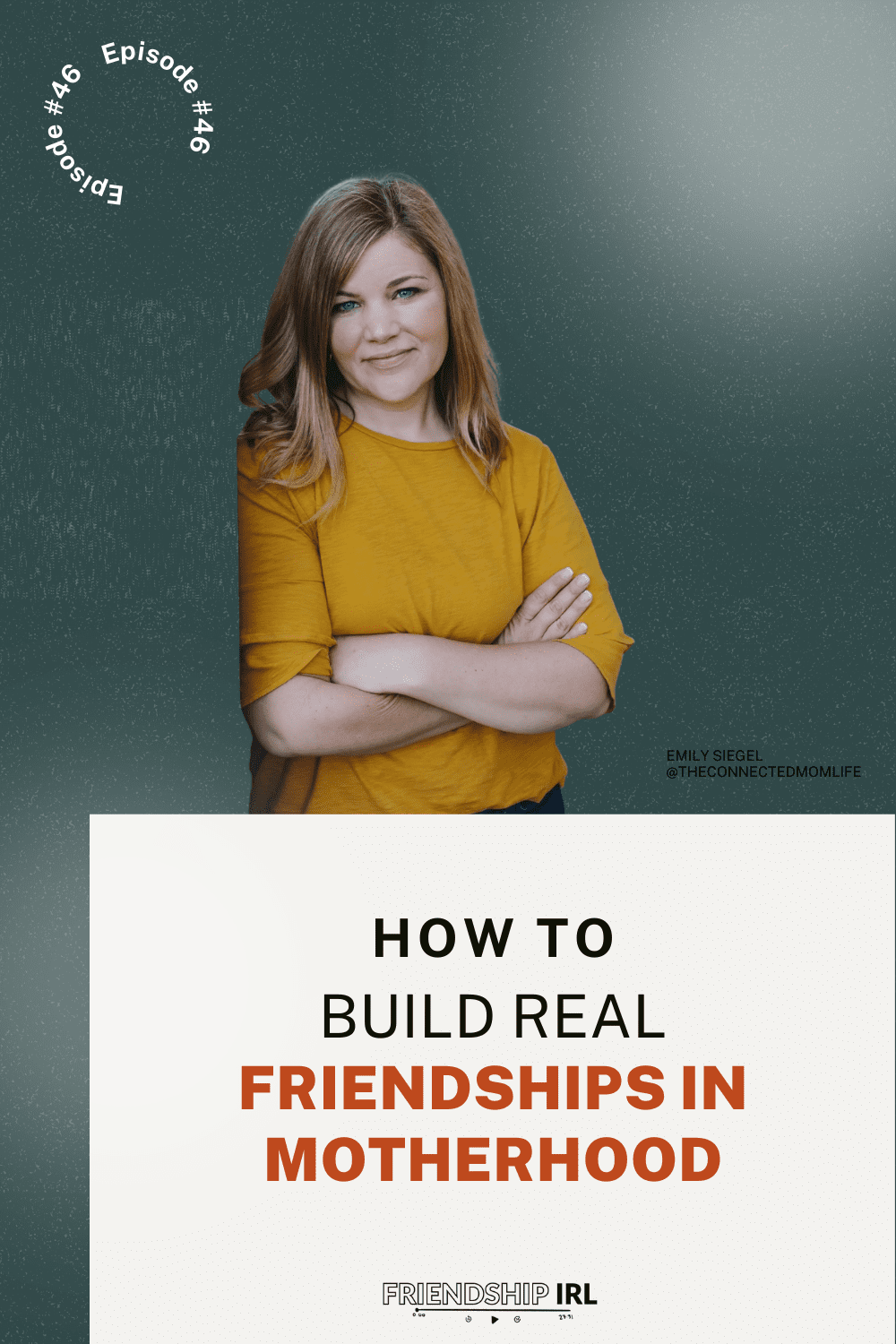
When Emily Siegel moved to a new city with her 4-month-old baby, she thought she finally had it figured out. For five years, she and her husband had lived somewhere they knew no one, constantly joking that they needed “a dog or a baby” to make friends. They’d watch other people at dog parks and playgrounds, assuming friendship just naturally happened in those spaces.
So when they moved again – this time with an actual baby – Emily was ready. She had the “tool” she’d been waiting for. Making mom friends was going to be easy, right?
Spoiler alert: It wasn’t.
And if you’re a parent who’s ever felt like you’re failing at this whole “mom friend” thing, Emily’s story is going to change everything for you.
The Problem with Waiting for the “Right” Season
Here’s what Emily discovered that I think every parent (and honestly, every person) needs to hear: There’s no magical season when friendship becomes easy.
Emily had spent those five years before kids actually developing something crucial – what she calls the “friendship muscle.” She’d learned to be forward about wanting connections, to be vulnerable with new people, to risk those awkward initial conversations.
When she finally had her baby and started connecting with other moms, something beautiful happened. “They were almost so grateful for my forwardness,” she told me. “Almost like, ‘Oh, we can do that?’ And I’m like, ‘Yeah, five years ago I learned that it’s okay to be more forward about wanting and desiring friends.’”
But here’s the thing – if you’re currently in that pre-parent phase thinking “I’ll just wait until I have kids to make friends,” you’re missing out on developing that exact muscle Emily had already built.
In the full episode, Emily goes much deeper into why developing your friendship skills before major life transitions gives you a significant advantage, and how the assumptions we make about who wants to be friends with us are often wrong. It’s perspective-shifting stuff.
The Reality Check Nobody Talks About
Even with her friendship skills already developed, Emily encountered unexpected hurdles that shattered her romanticized vision of motherhood and friendships.
The Schedule Trap: “All of our babies were on wildly different schedules. We were just less willing to disrupt our kids’ schedules to get together for a play date. It took way more planning than I anticipated.”
The Attention Split: You’re trying to have a conversation while also making sure your child doesn’t fall and get hurt. Your new friend is doing the same thing. The result? What Emily calls “super choppy” conversations, where it’s hard to go deep because you’re both juggling the needs of your kids.
The Parenting Anxiety Layer: “Parenting in general can be very anxiety-inducing… And then to have to do that in front of someone else who’s likely going to be judging you as a person and potential friend based on how you handle this situation, that you’re already like, ‘I don’t really know how to handle this.’”
Sound familiar?
Here’s what Emily wants you to know: This isn’t friendship failure – it’s just a different kind of vulnerability. You’re letting each other into the reality of your life in a less controlled way. That’s actually beautiful, even when it doesn’t feel like those deep heart-to-heart conversations you might be craving.
The Game-Changing Reframe
Instead of seeing these challenges as obstacles, Emily discovered something powerful: These moments of existing in the chaos together actually accelerate friendship.
“It’s these small moments that add up and continue to build trust,” she explained. “Sometimes it can feel like such a sacrifice to show up to something… because it still feels like work. But the whole point is to get to a space where it feels easy. There’s no magic moment where it suddenly switches – it’s those little moments that add up.”
The key insight? You can’t pinpoint when someone became your friend. It happens through a series of small moments – some memorable, some that just melt into the fabric of your relationship.
The complete episode explores this beautiful concept in so much more detail, including why trying to fast-track to “best friend” status actually works against you. Emily’s perspective on how friendships actually develop will change how you approach new connections.
The Wednesday Night Revolution
Here’s where Emily gets brilliantly creative. Tired of the pressure and logistics of traditional “mom’s night out” dinners, she tried something radical.
She sent an email to 12 moms with this message: Every Wednesday night is moms’ night at my house. The door is open. No RSVP required. Come in yoga pants and no makeup – that’s how I’ll be dressed. Don’t bring wine or snacks – I’ve got us covered. If you suddenly think you can make a break for it, just show up. We’re risking that 13 of us might show up at once, but I think it’s going to work out.
The result? Six months of weekly connections with 1-2 moms showing up each week. Zero planning is required after that initial email.
“I was able to have mom friends weekly without any planning. It was amazing,” Emily said.
But here’s the real magic: Because most gatherings ended up being 2-4 people total (Emily’s happy place), all those relationships deepened significantly. When she moved 15 minutes away two years later, she was able to maintain half those friendships – something she doesn’t think would have been possible without those Wednesday nights.
The Three New Rules That Change Everything
Emily has three rules that have revolutionized how she approaches mom friendship – and honestly, they apply to friendship in any season of life.
Rule #1: It’s Safer Than You Think
The research is clear: most of us are craving more connection. Emily went to her first PTA meeting expecting everyone to say they were there to support the school. Instead, every single parent said, “I’m here to meet other parents.”
“It truly is safe to be like, ‘Hey, do you want to be friends?’ And it’s safe to say, ‘I’m just looking to connect with more moms,’” Emily explains.
Rule #2: Phones Are the New Playground
You don’t need constant face-to-face time to build a friendship. Emily uses her phone strategically between gatherings – commenting on social media posts with personal touches, sending encouraging texts, and staying connected in small ways.
“You don’t have to see each other every day to make friends, to keep the momentum going,” she says.
Rule #3: The Bar Is Lower
This might be the most important rule of all. Emily isn’t encouraging anyone to be a bad friend, but she is encouraging parents to get realistic about what being a “good friend” looks like in this season.
“I’m not the friend who’s gonna remember your birthday. I wasn’t that friend before kids,” Emily admits. “But if you are with me, I am so present. My phone is not around. I am asking questions. I am validating your feelings.”
The exercise she gives moms: What do you have to give? If you can offer empathy, support, and quality face-to-face time once every couple of weeks or once a month, would that be valuable? Most people would say yes.
I share so much more in the full episode about how Emily defines friendship in this season and why lowering the bar actually creates space for deeper connections. Her approach to redefining “good friend” is honestly revolutionary.
Beyond the Mom Friend Box
Here’s something that might surprise you: Some of Emily’s most valuable friendships during early motherhood were with people who didn’t have kids.
“I was so particularly grateful for my friends who didn’t have kids at that point, because babies can be a very lonely and isolating time,” she shared. “Having people that had more flexibility than I did… those were the friends I missed the most when I moved.”
We make so many assumptions about who would want to be friends with us. Emily and her husband became close friends with people 20 years older than they were when they were in their mid-20s. She wanted to befriend a couple in their 50s at church, but worried they’d think it was weird.
What if we stopped limiting ourselves to people in our exact same season?
The Beautiful Truth About Friendship in Parenthood
Life feels so much lighter with people by your side – whether you have children or not. Yes, kids might bring additional stress, but that doesn’t mean people without children don’t have stressors too.
And here’s what Emily wants every parent to know: You don’t have to choose between being a good parent and being a good friend. You just have to redefine what “good friend” means right now.
Maybe you can’t remember birthdays, but you’re incredibly present when you’re together. Maybe you can’t text back immediately, but you always eventually respond. Maybe you can’t do late nights out, but you can host Wednesday night gatherings in your living room.
The friends worth having? They’ll see the value in what you can give, not just focus on what you can’t.
The complete episode dives deeper into navigating friendship transitions as a parent, including how to have conversations with friends who may not understand your new limitations. Emily’s wisdom on this is something every new parent needs to hear.
Your Turn to Get Creative
Emily’s Wednesday night open door is just one example of thinking outside the traditional “mom’s night out” box. Maybe that doesn’t work for your schedule or your personality, but what could?
Could you start a recurring coffee meetup at a playground where kids can play while you actually talk? Could you create a group text for spontaneous park hangs? Could you organize family slumber parties where everyone brings their kids, and you all hang out together?
The point isn’t to copy Emily’s exact approach – it’s to get creative about removing the barriers that make friendship feel impossible in this season.
As Emily says: “We aren’t made to mom alone.” And you don’t have to.
Let me ask you this: Do you have any friends who are parents? What are ways you can make friendship easier for both of you?
Whether you’re a parent looking for connection or a friend to parents trying to stay close, this conversation has so much more to offer. Emily’s insights on building the friendship muscle, using technology to accelerate connections, and redefining what friendship looks like in different seasons of life are game-changing.
Listen to Episode 46: “The Myths of Mom Friends” wherever you get your podcasts. And if you’re a parent feeling like you’re doing this alone, know that you’re not – and connection is more possible than you think.