Have you ever shown up to hang out with a friend and thought, “I love this person… and also, are we just going to do the exact same thing we always do?” You’re not dreading it. You’re not ready to end the friendship. You’re just a little bored. A little flat. A little like something that used to feel alive has quietly gone on autopilot.
That’s a stale friendship. And it’s not the same thing as a dying one.
In this episode, I’m talking about what actually happens when a friendship gets stale, why it doesn’t mean something is broken, and five concrete ways to shake it up, grow some new roots, and stop defaulting to the same Tuesday night on the couch.
A Stale Friendship Is Not a Dying Friendship
A few months ago, I was hanging out with some couch friends, same as always. Dinner, laying around, catching up on the week. And then someone said it out loud: “We always just do the same thing.”
The room could have gotten tense. Someone could have gotten defensive. Instead, all six of us just nodded. Because it was true.
Here’s what I want you to notice about that moment: nobody said this friendship is bad. Nobody said I don’t want to be here. What got named was something more specific. Comfort had started to feel stale. And there is a difference.
A stale friendship is one where you are maintaining roots instead of growing new ones. If you’ve heard me talk about the Roots of Connection framework before, you know I think about friendship through three types of roots: shared experience roots, emotional intimacy roots, and story roots. (If you haven’t heard it, Episode 12 is the place to start.) Just like a plant, roots need to grow, not just survive. You can water something all summer, make sure it gets light, do everything right, and it still might not grow a single new leaf. That’s maintenance. And maintenance is not the same as growth.
Nothing has been neglected in a stale friendship. Nothing is necessarily wrong. It has just been sitting in maintenance mode for a while, and you’re starting to feel it.
The messages out there will tell you: if it feels stale, it’s run its course. Move on. I want to offer you a different read. Before you write it off, try a refresh.
The First Move: Name It Out Loud
This is what my friend did. And it changed everything about that night.
The key is that naming it is an invitation, not a complaint. Those land very differently. “Ugh, we always do the same thing” closes the room. “I love our time together, and I’d also love to see if we can try some new things” opens it. Feel free to use that line verbatim.
After my friend said something, I grabbed my phone, opened the notes app, and we just started brainstorming. What are things you’ve been wanting to try? Museum nights, a supper club, local rugby games, the horse racing track, random walks in parts of the city none of us had been to, weekend trips. In maybe 30 minutes, we had 40 or 50 ideas on a list.
We haven’t done all of them. We’ve definitely defaulted back to the couch. But that conversation created an opening. And now anyone feels comfortable floating a new idea, adding to the list, saying “hey, this looks fun.” That’s the shift. Not a perfect new friendship. Just an open door.
Make it a shared note. A Pinterest board. Whatever platform lets you both add to it over time. The point is one shared space where the friendship can be creative together.
If this is the part that’s already hitting close to home, listen to the full episode at friendshipirl.com/episode194, where I walk through exactly how that conversation went and what came after.
Five Ways to Grow New Roots
Once you’ve named it, here’s where to actually go. These are five ways to move a stale friendship from maintenance mode back into growth.
1. Add a new shared experience root.
You’re not looking for a better version of what you already do. You’re looking for something completely different. A language class. Duolingo together. A museum you’ve never been to. A restaurant list you’ve been building in your head. A club. A walk somewhere new.
And here’s one I love for long-term friendships: pick something you used to do together early in the friendship and bring it back, just once. You used to take dance classes. You haven’t danced in a decade. Can you go dancing one time? Not a series. Not a commitment. One night. A little bit of that old energy, brought into the present.
2. Add a new emotional intimacy root.
Emotional intimacy roots are the shared history, the details, the things you know about each other. And there are two ways to grow them.
The first is to ask about things you genuinely don’t know. If you met this friend as adults, you might not know much about their college years, their high school state championship run, their first car. Ask. “What kind of car did you drive in high school?” is not a small question. It’s a way to fill in the person before you knew them.
The second is to ask about things you think you already know. This one surprises people. Say your friend has always loved chocolate, and you know their favorite is a specific chocolate croissant. Ask them: “What’s your top chocolate thing right now?” Because what you might find is that six months ago they made a chocolate lava cake and now that’s what they dream about. You thought you had the answer. You didn’t. And the moment you ask, you give them the experience of being truly seen. Someone paid close enough attention to know what they used to love, and now actually wants to know what they love now.
Tell your friends these things about yourself too. Update them. Give them new information. That’s how emotional intimacy roots grow on both sides.
For the full breakdown of how emotional intimacy roots work and why the small details matter more than you think, the complete conversation is at friendshipirl.com/episode194.
3. Update a story root.
Story roots are your beliefs and expectations about the friendship. What kind of friends are you? What do you do together? What can you count on each other for?
If the friendship feels stale, it might be time to add a new belief. “This is a friend who’s always down to try something new with me.” “This is a friend I can text with a wild idea and they’ll say yes.” But here’s the thing: beliefs need evidence. You can’t go do one spontaneous thing and expect a new story root to form. You need a few data points before you both start to trust that this is who you are together now. So give it time. Try a few things. Let the evidence build.
4. Change the container.
This one is underrated. Sometimes the same activity just needs a different shape. Change the cadence, the format, the group size, the time of day, the location.
If you always hang out at someone’s house on weeknights, what if everyone brought a craft or a project and you did it on a Sunday morning instead? Same people. Different container. That can be enough to make the whole thing feel new.
What if you invited one new person into the mix? Not always, not forever, just once in a while. A friend of a friend. Someone you’ve been wanting to introduce. A little fresh energy in the group.
Or the simplest version: instead of Thursday night on the couch, Thursday night walk in a neighborhood none of you have ever been in. Same group, same day, same time. One variable changed. Sometimes that’s all it takes.
5. Name it, then keep going.
This isn’t a one-time fix. The real shift that happened with my friends wasn’t the list. It was the culture that came after. An opening where anyone could float an idea without it feeling like a criticism. Where trying something new became a normal thing we do, not a big deal.
Little shifts, repeated again and again, add up faster than you’d think. A few new questions. A new activity here and there. A change in where you meet. A month or two of that and the friendship can feel completely different, not because you overhauled it, but because you kept growing instead of just maintaining.
If Your Friendship Feels Like It’s on Autopilot
A friendship on autopilot is not a friendship that has failed you. It’s a friendship that has gotten comfortable, and comfort is not a bad thing. Comfort means you built something real. The question is just whether you want to stay there or grow.
You don’t need a dramatic conversation. You don’t need a big intervention. You need someone brave enough to say “I love this, and I think we can do more with it” and a friend willing to nod and grab their phone and start a list.
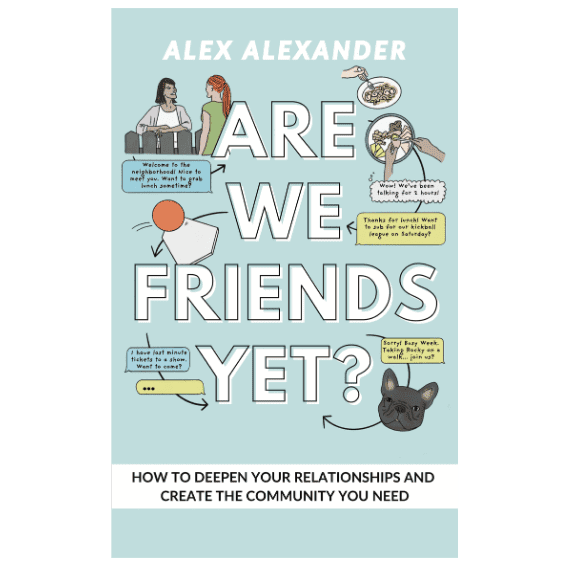
If you want the full framework behind all of this, head to Episode 12 for a deep dive on the three types of friendship roots. And if you want to go even deeper on how to grow and transform your existing friendships, that’s a big part of what I wrote about in Are We Friends Yet? (link in the show notes). The reviews keep coming back to that section specifically, which tells me this is the thing a lot of us are sitting with.
For the full conversation, including the story of how one honest moment with my couch friends turned into a 50-idea list and a completely different way of hanging out together, listen to Episode 194 at friendshipirl.com/episode194.