What if the most embarrassing way to make a friend turned out to be the best decision you ever made?
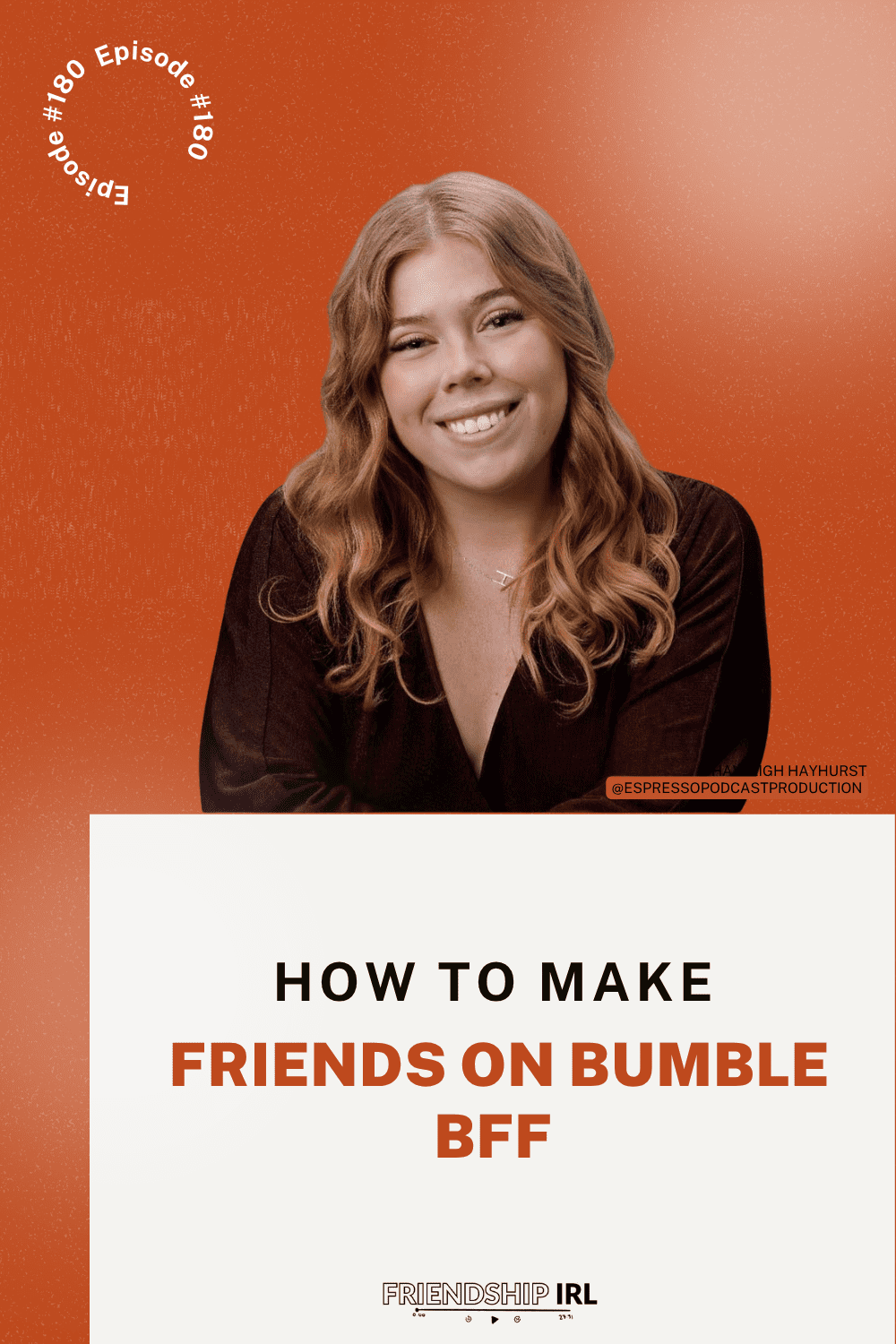
That’s basically what happened to Hayleigh Hayhurst. She moved to Seattle during the pandemic knowing two people. She was lonely in the way that only a new city can make you lonely, not dramatically, not obviously, just quietly aware that she was borrowing someone else’s social life instead of building her own. So she downloaded Bumble BFF.
Now she has a best friend she stood next to at her wedding. A neighbor friend who lives within walking distance. A whole friend group she built from scratch, intentionally, using filters.
And whenever she tells people how she met her best friend, the reaction is, in her words, hilarious.
This episode is for everyone who has looked at a friendship app and thought: that’s not how real friendships happen. Because Hayleigh’s story is a pretty direct argument that you’re wrong about that. And more importantly, it’s a story about what actually makes a friendship real… and it has nothing to do with how you met.
The “Real Friendships Are Organic” Myth
Let’s just name it.
When people say real friendships are organic, what they usually mean is: the method has to look a certain way for the friendship to count. You met at a party, through a mutual friend, at work, at the gym. Those count. An app? That’s… different.
But think about what we’re actually saying there. We’ve completely normalized swiping through hundreds of strangers to find a romantic partner. There are Tinder photo booths at weddings. Dating apps are just Tuesday. And yet the idea of downloading an app specifically designed to find a FRIEND, someone you’re not trying to merge your entire life with, somehow feels more embarrassing?
That’s a weird rule. And it’s keeping people lonely.
Hayleigh moved to Seattle in the middle of a pandemic. She was 22, fresh out of college, living with a roommate who had a partner, in a city where she knew almost no one. She started going on romantic dates just to have a reason to leave the house. Eventually she started dating someone, but even then:
“I just was feeling that loneliness of being in a new city. Relationships always make me feel a little trapped.”
She wasn’t looking for more dates. She was looking for friends. And she’d already proven to herself that apps worked for meeting people. So the logic was simple: why can’t I meet friends on a dating app?
That question is worth sitting with. Why CAN’T you?
The Friend Date Nerves Nobody Talks About
Here’s something Hayleigh said that I think is going to hit for a lot of people:
“I was more nervous to go on friend dates than I was to go on real dates. Because I felt like it was a different kind of rejection. If a guy doesn’t like me, whatever, his loss. If a friend doesn’t like me, that’s a little more personal.”
I want to pause on that.
Romantic rejection, we’ve been trained to brush off. His loss. Wasn’t meant to be. Plenty of fish. We have the whole script. But friendship rejection? We don’t have that script. And somehow it cuts deeper, because it feels like it’s about who you ARE as a person, not just whether you’re someone’s type.
Which is, honestly, a little backwards. A romantic partner is someone you’re hoping to build your ENTIRE life with. A friend is someone you want to get coffee with. The stakes are objectively lower. And yet.
What got Hayleigh over the hump was a simple question she asked herself: what do I have to lose?
“The first person I met, we’re still friends to this day. Are we BFFs? No, but we are still friends and see each other from time to time. It was so much nicer than I could have imagined. I was so nervous to go on this first friend date, but she was so sweet. That’s what I tell everyone when they complain about not having friends. Just try Bumble BFF, because what’s the worst that can happen?”
The worst that can happen is you get coffee with someone you’re not going to get coffee with again. That’s it. That’s the risk. And most of us have done exactly that at a work event, a neighborhood gathering, a party. We just didn’t have to download an app to do it, so it didn’t feel weird.
The weirdness is in our heads. The friendship is real.
If you want to hear Hayleigh describe that first friend date in her own words, the nerves, what made it easier than she expected, and the moment she realized this was actually going to work, listen to the full episode .
Why Borrowing Your Partner’s Friend Group Isn’t the Same Thing
There’s a moment in this episode where I went a little off-script, and I want to explain why.
Hayleigh mentioned that she’d been dating someone who lived an hour away. He had friends. She didn’t. And I asked: did he have a big social life?
The reason I asked is something I think about a lot. When there’s an imbalance in a relationship, one person has a full, rich social world and the other doesn’t, it can actually make loneliness feel MORE intense, not less. Because now you can SEE what you’re missing. You’re sitting at a table full of your partner’s friends, and they’re all on the inner rings of each other’s Wheel of Connection, and you’re… familiar. At best.
Your partner might fold you in. Invite you to the hangouts. Introduce you around. And that’s genuinely sweet. But you can’t borrow someone else’s roots. You can’t inherit someone else’s history and call it your own support system.
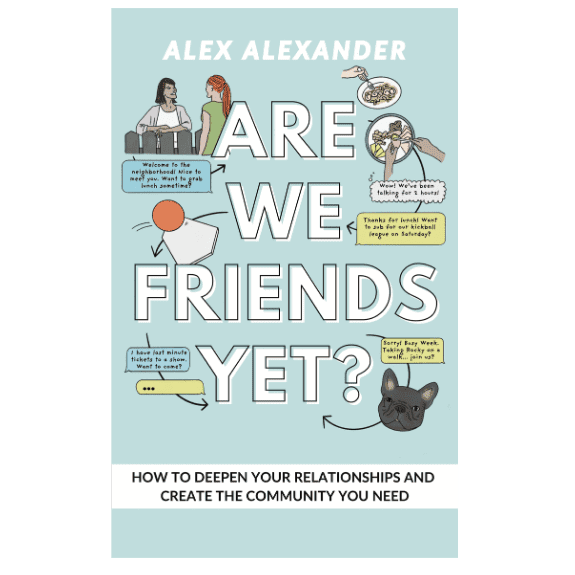
(If you want the full breakdown of what I mean by the Wheel of Connection and why familiar friends feel different from present friends, head to Episode 100. Or honestly, just get the book. It’s the most complete version of this framework I’ve ever put in one place. Link in the show notes.)
Hayleigh figured this out herself. She had her boyfriend, her roommate, a couple of people she’d met organically. And she still felt lonely. Because what she actually needed was HER people. Built by her, for her, in her own life.
So she went and built them.
The Part About Filters (This Is Actually the Best Part)
One of the things I love most about this conversation is how SPECIFIC Hayleigh was about what she was looking for.
At 23, newly single, she wanted friends who were also single, child-free, and wanted to go out and explore the city. She filtered for that. She wrote it into her profile. She wasn’t apologetic about it.
“I wanted more single friends, so it says on there, like their relationship status, if they have kids. I was like 23 and I still don’t have kids, and was not really interested in making friends with kids at that time in my life.”
And then, this is my favorite part, when she moved to West Seattle, she downloaded the app AGAIN with a completely different filter. One mile. That’s it. She just wanted one friend who lived within walking distance.
“I don’t have family here, so it’s nice to be able to have people within arm’s reach. One mile. That’s all I gave it.”
That friend is Sarah. They’re besties now.
Here’s what I want you to hear in that: as an adult, you actually get to decide what you’re looking for in a friend. When you were a kid, you got whoever was in your class, on your team, in your neighborhood. You didn’t pick. As an adult, you have complete control. And most people never use it, they just wait for something to happen organically and then wonder why their friend group doesn’t quite fit their life anymore.
Hayleigh used the filter. She got exactly what she wanted. Twice.
Think about what YOUR filter would be right now. Someone within a mile? Someone who’s also child-free? Someone who loves the same kind of weekends you do? Someone who’s also new to the city?
(I’ve done whole episodes on meeting people in your neighborhood if the app isn’t your thing. Episode 52and Episode 162. But if the filter idea is appealing, the app just makes it easier.)
Getting Off the App and Into Real Life
One thing Hayleigh is clear about: she doesn’t want to text forever.
“I don’t really want to talk to someone on the app that much, because quite honestly, I don’t care. I don’t want to sit there and like write and text and do all these things. I can’t tell until I’m with them, so I just like to be like… okay, straight to the point, let’s meet up.”
This is actually one of the most useful pieces of practical advice in this whole episode. The longer you stay in the app, the more pressure builds around the eventual meetup. You’ve invested all this time in the conversation, and now the in-person has to live up to it. Cut that off early. Match, vibe-check the profile, suggest a time and place.
Hayleigh’s message to Sarah was essentially: I saw you live at Alki too, want to meet for happy hour? That was it. Time and place. Done.
The people who actually want to meet up will respond. The people who keep putting it off are telling you something useful about how much they’ll initiate later.
And when you DO get there? It’s just coffee. Or a drink. Or a walk. It doesn’t have to be a two-hour emotional deep-dive. Hayleigh’s first friend date was just… nice. Low-key. A drink with someone who turned out to be sweet.
“It was just so much nicer than I could have imagined.”
That’s the bar. It just has to be nicer than you feared. And it almost always is.
The Wedding Story (And Why People’s Reactions Are Hilarious)
Hayleigh met Lauren on Bumble BFF. They’ve traveled together. Hayleigh was in Lauren’s wedding. When Lauren gets married, Lauren will be in hers.
And when people ask how they met?
“People’s reactions are hilarious. They’re like… like the dating app? And we’re like, no, no, like the BFF side. A lot of people have never heard of it, and they assume that we’re in a relationship. That response is so funny.”
There’s something worth sitting with in that reaction. People hear “Bumble” and their brain goes to romance, because that’s the only frame they have for intentionally going looking for a person to connect with. The idea that you would do that for a FRIEND, that you would be that deliberate about it, doesn’t compute.
But why shouldn’t it?
We are deliberate about our careers. Our health. Our romantic relationships. We make vision boards and set intentions and hire coaches. And then we leave our friendships entirely to chance and wonder why we feel lonely.
Hayleigh didn’t leave it to chance. She knew what she wanted, she went looking for it, she didn’t let the awkwardness stop her. And now she has a best friend, a neighbor friend, and a whole group she built from scratch.
The method was an app. The thing that actually mattered was the intention.
That’s the whole episode, honestly. But there’s so much more in the full conversation, including how Hayleigh plays friendship matchmaker with her own friend group, what she does when personalities clash, and the story of a two-hour hangout that almost got derailed in the last five minutes. Listen to the full episode.
What If You’re Still Not Sold?
Genuinely, no pressure.
If the app isn’t your thing, there are dozens of other ways to find your people. Episodes on third places, neighborhoods, community groups, friends of friends, the Friendship IRL catalog has covered a lot of ground. Go find the method that fits you.
But if this episode lit something up, here’s what I want you to do:
Think about what your filter would actually be. Not vaguely, specifically. What do you actually want in a friend right now, given where you are in life, where you live, what your weeks look like?
And then ask yourself: are you actively looking for that? Or are you just hoping it happens?
Because Hayleigh spent a whole summer at Alki Beach. She goes out almost every day. She’s not a homebody. She lives a full life outside her house.
And she still couldn’t find what she was looking for just by existing in the world.
“It’s something I was craving in my life, so I just made it happen.”
That’s it. That’s the whole thing. You can want something and also go get it. The method is just the method.
If you want to go say hi to Hayleigh, ask her about Bumble BFF, about building a friend group from scratch in a new city, about running a podcast production agency, find her links in the show notes. She will message you back.
And if any of this made you think differently about how you’re making (or not making) friends right now, listen to the full episode. Hayleigh’s story is the kind that makes you want to open your phone and do something about it.