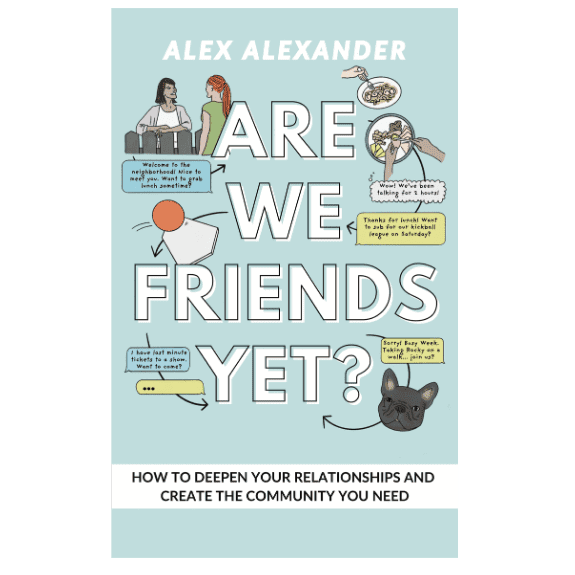
“There’s a lot of conversation going on out there about how maybe our baseline for loneliness has shifted – and not in a good way. That the past few years, lonely has become our normal. We got really good at just sitting in our loneliness. And I don’t necessarily think that’s a good thing.”
Can we just be honest about something for a minute? Loneliness has become our default setting.
I know, I know – we’re supposed to be okay with solitude. We’re supposed to know how to self-soothe and sit with ourselves and be comfortable with boredom. And yes, those are important skills. But what I’m talking about is different. I’m talking about that consistent feeling of wishing you had more connections, more people to share life with, more friends who really get you.
Society keeps telling us that making friends as an adult is just hard, like it’s some inevitable truth we have to accept. But here’s what I believe: we can absolutely impact this area of our lives through small, intentional actions that build up over time.
So instead of just complaining about how difficult adult friendship is, I decided to do something about it. I set five specific friendship goals for myself – and more importantly, I figured out the concrete steps I’d take to actually achieve them.
Let me walk you through what I’m doing, because honestly? Some of these strategies might surprise you.
The Problem: We’ve Accepted Loneliness as Normal
Here’s the thing that’s been bothering me: somewhere along the way, we started treating social isolation as just part of adult life. Like once you hit a certain age, you’re supposed to be satisfied with your existing friend group (if you have one) and maybe your romantic partner and family.
But connection is survival. It’s not a luxury or something you get to once you’ve checked all the other boxes. It’s a fundamental human need that deserves the same intentional investment we put into our careers, our health, and our hobbies.
So I decided to approach friendship like I approach any other important goal: with strategy, specific actions, and a willingness to step outside my comfort zone.
Goal #1: Mix Up My Patterns and Put Myself Out There
This one sounds simple, but it’s actually been the most challenging for me. It’s about breaking out of my usual routines and creating opportunities for spontaneous connection.
What this looks like in practice:
- ▪️ Having random conversations with people in coffee shops (yes, I’m that person now)
- ▪️ Signing up for classes where I don’t know anyone
- ▪️ Saying yes to invitations that feel slightly uncomfortable
- ▪️ Taking different routes, going to new places, switching up my regular spots
The key here isn’t to become someone I’m not – it’s to create more opportunities for connection within who I already am.
Just last week, I struck up a conversation with someone at a bookstore about the book they were holding. Did we become best friends? No. But we had a genuine ten-minute conversation that reminded me how much I enjoy connecting with new people. Those small interactions add up.
Goal #2: Lean Into Formal Communities
This one has been a game-changer for me, and I think it’s because formal communities solve so many of the problems that make adult friendship feel impossible.
“The other reason I really have enjoyed investing in this formal community is that I never know who’s going to walk through the door. It’s an open group. Anybody can join, any week, as a guest. Anybody can become a member. I have met so many interesting people that would not be in my daily orbit otherwise.”
Here’s why formal communities work:
You never know who’s going to show up. Unlike meeting people through existing friends (where you often end up with similar people), formal communities bring together people from completely different backgrounds, ages, occupations, and even countries.
There are common goals. You’re all there for the same reason, which gives you an instant foundation for connection.
Built-in opportunities for growth. Most formal communities are focused on learning or improving in some way, which means you’re connecting with people who are also invested in personal development.
Structured interaction. You don’t have to figure out how to start conversations – the format does that for you.
I’ve joined a few different groups this year, and the variety of people I’ve met has been incredible. It really is broadening my horizons in ways I didn’t expect.
In the full episode, I go much deeper into the specific communities I’ve joined and how I’ve approached them as someone who’s pretty introverted. If you’re curious about this strategy but not sure where to start, I think hearing the details might help.
Goal #3: Prioritize Business Friendships
This one might sound weird, but hear me out: I need friends who understand what it’s like to build an online business.
Most of my existing friends work traditional jobs, and while I love them dearly, they don’t always get the unique challenges and excitement of entrepreneurship. The feast-or-famine income, the isolation of working from home, the weird schedule, the way your brain never really turns off…
So I’ve been intentionally seeking out other entrepreneurs, especially women building online-based businesses. This means:
- ▪️ Joining more business-focused groups and masterminds
- ▪️ Saying yes to networking events (even when they feel awkward)
- ▪️ Being more open about my work on social media
- ▪️ Reaching out to other podcasters and content creators
The goal isn’t to use these relationships for business purposes – it’s to find people who understand this particular slice of my life experience.
Goal #4: Use Resources to Reinvigorate Long-Distance Friendships
Here’s something Michael and I decided this year: we’re going to spend money on friendship.
I know that sounds privileged, and I’m aware not everyone has the financial flexibility to do this. But for us, it meant acknowledging that some of our most important friendships have become geographically distant, and if we want to maintain them, we need to invest in travel and quality time together.
So instead of just saying “we should really visit so-and-so,” we’re actually booking the trips. We’re treating friendship maintenance like any other important expense in our budget.
This doesn’t mean expensive vacations – sometimes it’s just covering the cost of a weekend trip to see friends who moved away, or flying someone in to visit us. The point is to be intentional about how we use our resources to prioritize connection.
The complete episode explores some specific examples of how we’ve done this and why it’s been so worth it. There’s something about making that financial investment that signals to both yourself and your friends how much these relationships matter.
Goal #5: Reinvest in Historic Friendships
This goal is about breathing new life into long-standing relationships that might have gotten a little stale or distant.
This looks like:
- ▪️ More intentional virtual check-ins (not just surface-level “how are you?” texts)
- ▪️ Reviving old traditions that we used to love but let slide
- ▪️ Planning trips or activities that recreate some of the magic we used to have
- ▪️ Being more vulnerable about what’s actually going on in my life
Some of my oldest friendships have settled into these comfortable yet somewhat superficial patterns. We love each other, but we’re not really sharing the deep stuff anymore. This goal is about changing that.
For example, I have a friend I’ve known since college, with whom I used to have the most amazing, deep conversations. Somewhere along the way, our calls became more about logistics and surface-level updates. So I started being more intentional about asking different questions and sharing more honestly about what’s really going on with me.
The result? Our last conversation felt like the old days – connected, meaningful, energizing.
The Real Strategy: Getting Creative with Your Resources
Here’s what I want you to understand: friendship goals without specific actions are just wishes.
The reason I’m sharing my exact strategies isn’t that you should copy them exactly – it’s because I want you to see how you can get creative with your own time, energy, and resources to invest in social wellness.
Maybe you can’t afford to travel to see distant friends, but you could start a monthly virtual book club. Maybe you’re too introverted for random coffee shop conversations, but you could join an online community related to your interests. Maybe you don’t have time for formal groups, but you could be more intentional about deepening existing relationships.
The key is being honest about what you actually want, then finding small, sustainable ways to move toward it.
I share so much more in the full episode about what this process has looked like for me – including some of the failures and awkward moments along the way. If you’re feeling stuck on how to apply this to your own life, I think hearing the whole conversation might spark some ideas.
What I’ve Learned So Far
A few months into focusing on these goals, here’s what’s surprised me:
Small actions really do add up. I’m not having dramatic friendship breakthroughs every week, but I am noticing that I feel more connected and less lonely overall.
Putting yourself out there gets easier with practice. The first few times I tried to strike up conversations with strangers, I felt so awkward. Now it feels more natural.
Investing in friendship pays dividends. When you show people that their friendship matters to you through your actions (not just your words), they often step up their investment too.
You can’t control outcomes, but you can control effort. Some of my attempts to deepen friendships haven’t worked out the way I hoped. But the process of trying has been valuable in itself.
Your Turn: What Would Social Wellness Look Like for You?
Here’s my reflection question for you: Using some tips from today’s show – or your own ideas! What are some ways you’d be willing to use your time and resources to invest in your social wellness this year?
I really want you to think about this practically. Not in some vague “I should be better at keeping in touch” way, but in specific, actionable terms.
Maybe it’s:
- ▪️ Texting one friend per week to make actual plans (not just to say hi)
- ▪️ Joining one new group or community
- ▪️ Planning a friend trip this year
- ▪️ Being more intentional about follow-up after meeting new people
- ▪️ Setting aside money in your budget specifically for social activities
Whatever it is, make it concrete enough that you can actually do it.
Because here’s the truth: we can absolutely impact our social connections through intentional action. It might not happen overnight, and it definitely requires stepping outside your comfort zone sometimes. But it’s so, so worth it.
Want to hear more about my specific strategies and how they’re working out? Episode 23 delves into each of these goals, offering more examples and practical tips. Plus, I share some of the awkward moments and failures along the way – because let’s be real, not every attempt at adult friendship goes smoothly.
Listen to Friendship IRL wherever you get your podcasts, and if this resonates with you, I’d love to hear about your own friendship goals.
Because honestly? We’re all trying to figure out how to do adult friendship better, and I think sharing our strategies (and our struggles) is how we help each other succeed.