Picture this:
It’s October 2021. You just moved to a new city. You’re excited. Finally, a place where you don’t have to organize everything yourself. Where you can just JOIN existing groups and activities.
Except… It’s the pandemic. Everyone’s hiding in their homes. Nothing is open.
And you know exactly zero people.
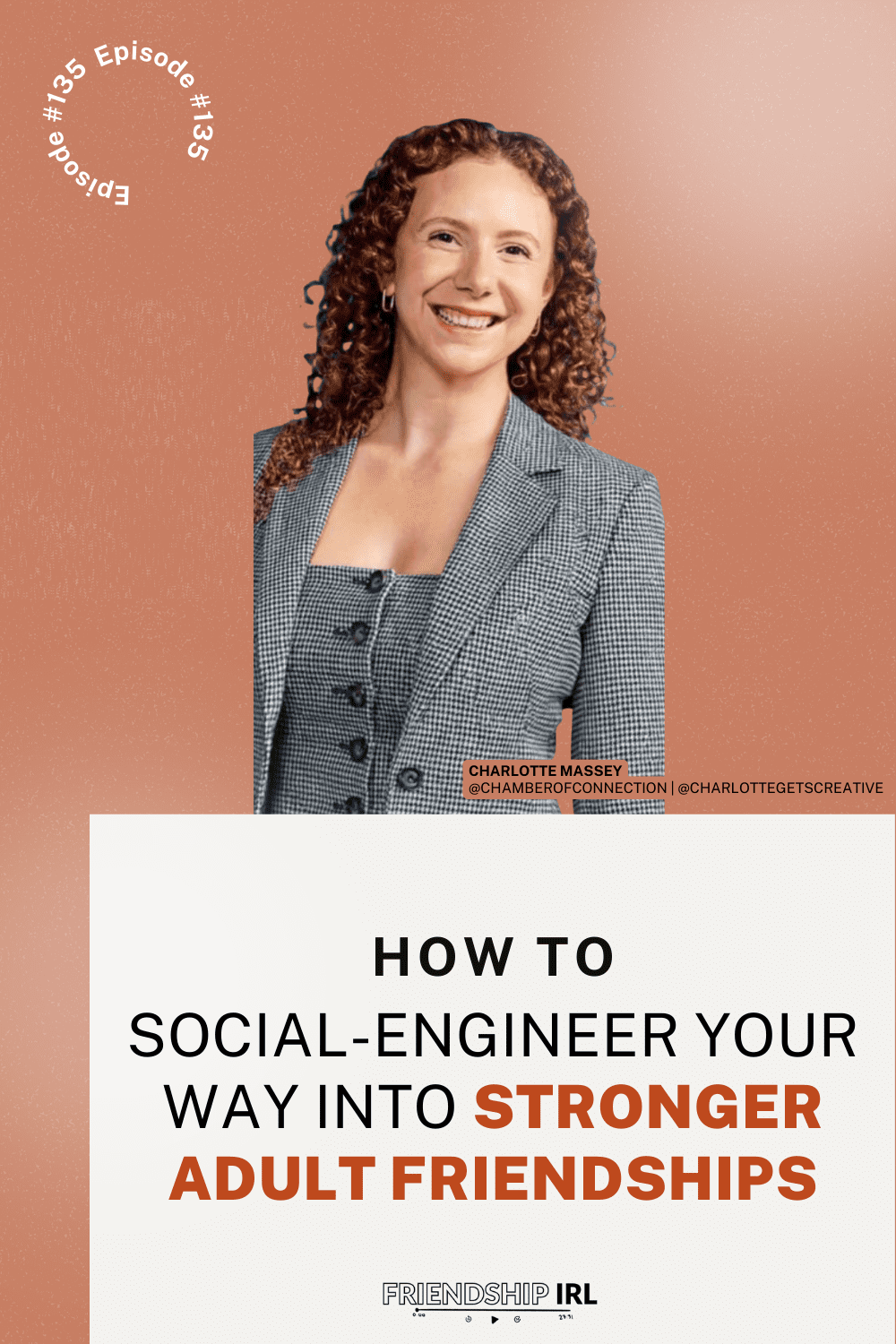
That was Charlotte Massey’s reality when she moved to Seattle.
Today (four years later) she hosts picnics with 100+ people. She founded the Seattle Chamber of Connection. She’s built a thriving community from absolute scratch.
And she’s going to tell you exactly how she did it.
Because here’s what I want you to understand: Charlotte’s story isn’t about luck. It’s not about being naturally outgoing or charismatic.
It’s about strategy, persistence, and being willing to do uncomfortable things for YEARS.
So if you’ve just moved somewhere new, or you’ve been somewhere for years but still feel disconnected?
This is your roadmap.
The Beginning: When Everything Failed
Charlotte moved to Seattle from Leavenworth, a small Bavarian-themed tourist town where she grew up.
She’d never lived in a city before. She was SO excited.
Finally, she thought, she could just show up to things instead of being the person who organized everything.
Spoiler alert: That’s not what happened.
She started with her boyfriend’s friends (now husband; it worked out!). But it was a small group. Mostly guys. All from the same fraternity.
“Not exactly my scene,” Charlotte said. “I wanted more girls to hang out with.”
So she made a list. Everyone she had ANY connection to: high school, college, mutual friends.
And she started reaching out.
The Yoga Studio Fail
Charlotte joined multiple yoga studios.
Total fail.
“Everyone just showed up, was silently in their bubble doing their yoga, and then left. I was super weird trying to say hi to people in the locker room.”
Did not make friends that way.
The Mountaineers Fail
She joined The Mountaineers, an outdoor hiking group. Started volunteering.
But most people were retirees. Not exactly who she was looking for.
The few people her age? They were moving OUT of the city.
Plus, there was a structural problem: “I’m a very experienced hiker. But you have to pass a lot of tests to go on advanced trips. My schedule was busy. I couldn’t fit in the tests.”
So she was blocked from the activities she actually wanted to do.
The Seattle Freeze (It’s Real)
Charlotte also experienced what people call the “Seattle Freeze” or the “Seattle Yes-No.”
You know what that is?
It’s when people say: “We should TOTALLY hang out sometime! Let’s get coffee!”
And then you try to lock in a time, and they flake. Or they cancel last minute because something better came up.
“I had multiple people cancel at the last minute because they had something else they’d rather do. Then it was ‘Oh we’ll totally reschedule’ and then we didn’t.”
“That was really hard when I was trying to make those first connections. I was really excited about those coffees.”
“It makes sense they weren’t as important to them. They already had social lives. But I didn’t.”
At one point, Charlotte seriously considered leaving Seattle.
But she decided to stick it out. And get strategic.
The Strategy: Treating Friend-Making Like a Sales Funnel
Here’s where Charlotte’s story gets really interesting.
She treated making friends like romantic dating.
“I absolutely treated it like romantic dating. I was very goal-oriented. I was looking for close friends I could hang out with regularly.”
And she built a sales funnel.
Yes. A SALES FUNNEL. For friendship.
“I knew I wasn’t going to find my best friend through only a few friend dates. With romantic dating, you don’t expect to go on one date and meet the person you marry.”
“So I had to accept: I’m not going to have a 100% conversion rate from coffee to close friend.”
“I needed to fill my funnel.”
So she:
- ▪️ Made lists of potential friend leads
- ▪️ Tracked everyone in a spreadsheet (yes, really)
- ▪️ Expanded her search beyond just people she had connections to
- ▪️ Started DMing people on Instagram and TikTok who seemed like good fits
- ▪️ Met people at conferences, ski areas, and on hikes
“I met one of my best friends on a chairlift.”
“I met another close friend on a hike. We didn’t go together, but I met her at the destination. She was with a group of young people who weren’t experienced hikers. I helped them get down because I had extra headlamps.”
“We exchanged numbers. I followed up. Now I’m going to her birthday party on Friday.”
The Quadruple Text (Without Shame)
Here’s something Charlotte said that made me want to throw her a party:
“I got pretty comfortable double or triple or quadruple texting without getting responses and just continuing to reach out.”
“I got a lot of responses saying ‘Oh my gosh, I’m so sorry, I really DO want to hang out.’ And because I kept sending invites, eventually we did.”
“If I hadn’t been as forward, it would have just become a fizzle.”
Most people would give up after one unanswered text. Maybe two.
Charlotte kept going. And it worked.
The Secret: Active, Specific Invites
But here’s what made Charlotte comfortable with all that follow-up:
She wasn’t sending desperate “please hang out with me” texts.
She was sending invites to cool things.
“Hey, I’m hosting this cool thing. Do you want to come?”
“Hey, I’m going to this cool event with some friends. Want to join us?”
“I felt like I was demonstrating that I was a good friend option because I knew of cool things happening.”
“That made me more comfortable doing socially awkward texting.”
And here’s the key: Active and specific invites.
Not “we should hang out sometime.”
“There’s a new exhibit at the art museum this Saturday afternoon. Want to check it out?”
“I’m making tacos Sunday night. Come over around 6.”
Make a decision. Send the invite. Some people will say no. Some will say yes.
The story of how the Seattle Picnic Society grew from zero to 100+ people is incredible. Hear it all in the full episode.
The Turning Point: Starting the Seattle Picnic Society
Okay, so Charlotte’s doing all this friend-dating. She’s building connections.
But she’s also hosting dinner parties. And they’re frustrating.
Her apartment was small: max 6 people. People would bail last minute. She had to clean her house. It was a LOT of work for early-stage friendships.
Then she had an idea.
She was walking around Green Lake and saw a group of girls having a picnic.
The same week, she and her husband saw a big group of about 30 friends having a picnic at Golden Gardens beach.
“We thought: Why don’t OUR friends invite us to do that? Why haven’t we done that?”
“We realized: If we want this to happen, we’re probably going to have to plan it.”
Picnic #1: Nobody Came
They invited a bunch of people to a picnic.
Nobody said yes.
So they postponed and tried again.
Picnic #2: 5 People
5 people came. It was really fun.
There was interest in continuing.
Picnic #3: 10 People
10 people came.
Picnic #4: 35 People
35 people came. Several brought their extended friend groups.
Charlotte decided: “Okay, we’re going to make this a thing.”
She designed a logo. Called it the Seattle Picnic Society. Made flyers in Canva.
And started sending direct invites to everyone individually.
“I was texting or messaging the flyer directly to everyone, tracking in my spreadsheet who I had invited to make sure I didn’t miss anybody.”
“The direct invites were really important. People felt that I directly wanted them there.”
Why Picnics Worked
The genius of picnics:
1. It works if nobody shows up (worst case: Charlotte and her husband read books in the park)
2. It works if 2 people show up
3. It works if 10 people show up
4. It works if 100 people show up (just keep expanding outward)
5. It doesn’t cost anything (everyone brings their own food and blanket)
6. It’s truly “the more the merrier” (unlike most Seattle activities: hikes, small restaurants, small bars)
7. People can bring their friends (expanding the network through warm introductions)
8. It’s casual but unique
“I think that’s one of the types of social activities we’re missing in Seattle. There aren’t many events that are truly open and free where you can bring anyone, and it really IS more the merrier.”
The Viral Moment
Charlotte started by personally inviting people she wanted to be friends with.
Then she posted about it on Instagram. The reel went viral.
Suddenly, instead of 35 people she’d personally texted, she had 100+ people wanting to come.
The group shifted from “my friends” to “public event for anyone looking to connect.”
And Charlotte had to shift her mindset: “It was no longer focused on MY social life. It became me hosting a public space where OTHERS could connect with each other.”
Today? The Seattle Picnic Society is a thriving community.
The Winter Solution: Craft Nights
But you can’t picnic year-round in Seattle.
So Charlotte started hosting craft nights.
Same concept: Open invite. Bring your own craft (or use the supplies she provides). Sit around a table and chat with new people.
“It’s really not about making incredible art. It’s about having something to do while you chat with new people.”
“Usually by the end, people are exchanging contact information and making plans to do something else together. Which is the whole goal.”
The craft nights gave year-round continuity. Someone could move to Seattle in August, come to picnics, then transition to craft nights through winter.
Want to know the framework behind building community from scratch? Listen to the complete episode for the 6 Points of Connection and more.
The Framework: 6 Points of Connection
All of this led Charlotte to her newest role: Executive Director of the Seattle Chamber of Connection.
A new civic organization tackling the loneliness epidemic.
And they have a framework: The 6 Points of Connection.
Here’s what a fully connected life includes:
1. Know your neighbors
2. Be part of a group based on an interest
3. Be part of a group based on an identity
4. Have a third place (somewhere you go regularly that’s not home or work)
5. Be involved in community service
6. Have one-on-one connections (ideally see them once a week)
Most of us could use work on at least one of these.
The Chamber of Connection hosts monthly “Welcome Days”: half-day workshops helping people build their plan for a connected life.
Then they onboard you into a community where you can do low-cost activities together:
- ▪️ Bike rides
- ▪️ Museum visits + shared meals
- ▪️ Farmer’s market + picnics
- ▪️ Neighborhood explorations
“When you’re doing it in community with others who are also new, who are also trying to build connection, it gives you that instant group.”
“Even if you don’t end up being long-term close friends, you have people to do things with while you’re all working on your six points.”
The Timeline: What 4 Years Actually Looks Like
Okay, so let’s talk real numbers.
Charlotte moved to Seattle in October 2021.
Year 1 (2021-2022): Lots of failed attempts. Yoga studios. The Mountaineers. Friend dates that went nowhere. Seattle Freeze experiences. Serious consideration of leaving.
Year 2 (2022-2023): More friend dating. Building a list. Tracking in spreadsheets. Quadruple texting. Meeting people on chairlifts and hikes. Starting to find some connections.
Summer 2023: Started the picnics. Nobody came to the first one. 5 people to the second. 10 to the third. 35 to the fourth.
Year 3 (2023-2024): Picnics going viral. 100+ people. Starting craft nights. Building real community.
Year 4 (2024-2025): Founding the Chamber of Connection. Hosting Welcome Days. Established community with depth and breadth.
Here’s what I want you to notice:
It took FOUR YEARS to get from “zero friends” to “thriving community.”
But it happened. Because Charlotte was strategic, persistent, and willing to be uncomfortable.
Your Turn: What You Can Do Right Now
If you’re reading this thinking, “I want what Charlotte built,” here’s what to do:
Step 1: Assess your 6 Points of Connection
Do you:
- ▪️ Know your neighbors?
- ▪️ Have a group based on an interest?
- ▪️ Have a group based on an identity?
- ▪️ Have a third place you go regularly?
- ▪️ Volunteer or do community service?
- ▪️ Have 1-on-1 connections you see weekly?
Which ones are you missing? Pick ONE to work on first.
Step 2: Make a list (yes, really)
Who do you have ANY connection to in your city?
- ▪️ High school or college friends
- ▪️ Coworkers
- ▪️ Friends of friends
- ▪️ People you’ve met at conferences or events
- ▪️ Neighbors you’ve said hi to once
Write them ALL down. This is your starting funnel.
Step 3: Send active, specific invites
Not “we should hang out sometime.”
“I’m going to [specific place] on [specific day] at [specific time]. Want to come?”
Step 4: Follow up. Multiple times. Without shame.
If they don’t respond? Send another invite to a different thing.
Still no response? Send another one.
Remember Charlotte’s words: “I got pretty comfortable quadruple texting.”
Step 5: Create your own recurring event
Maybe it’s picnics. Maybe it’s craft nights. Maybe it’s:
- ▪️ Weekly walks around your neighborhood
- ▪️ Monthly potlucks
- ▪️ Coffee at the same shop every Sunday morning
- ▪️ Book club at your place
Make it:
- ▪️ Consistent (same day/time)
- ▪️ Open invite (people can bring friends)
- ▪️ Low barrier (free or cheap, easy to join)
Step 6: Accept that it takes time
Charlotte’s timeline: 4 years.
That might feel discouraging. But here’s the thing:
She now has a thriving community. Deep friendships. A whole network.
Would you rather spend 4 years building that? Or 4 years wishing you had it?
Step 7: Track your progress
You don’t need a fancy spreadsheet (but you can!).
Just notice:
- ▪️ How many people are you reaching out to?
- ▪️ How many friend dates are you going on?
- ▪️ How many invites are you sending?
- ▪️ How many events are you hosting?
If those numbers are low, your results will be low.
If those numbers are high, eventually your results will be high too.
The Bottom Line
Here’s what I want you to take away from Charlotte’s story:
Building community as an adult is not easy. It’s not organic. It doesn’t “just happen.”
It requires:
- ▪️ Strategy (yes, spreadsheets!)
- ▪️ Persistence (quadruple texting!)
- ▪️ Creativity (picnics! craft nights!)
- ▪️ Time (4 years!)
- ▪️ Willingness to be uncomfortable
But it’s POSSIBLE.
Charlotte moved to Seattle during the pandemic. Experienced the Seattle Freeze. Had multiple failures.
And still built a thriving community.
You can too.
It just takes treating friendship like the serious life priority it is.
Live in Seattle? Check out the Seattle Chamber of Connection and their Welcome Days. Or show up to a Seattle Picnic Society picnic!
Ready to start building your own community? Tune into the full episode for all the strategies and stories shared above.