“What happened to you along the way where you’re just not open or something like that, like, what happened? You’re not open to it?”
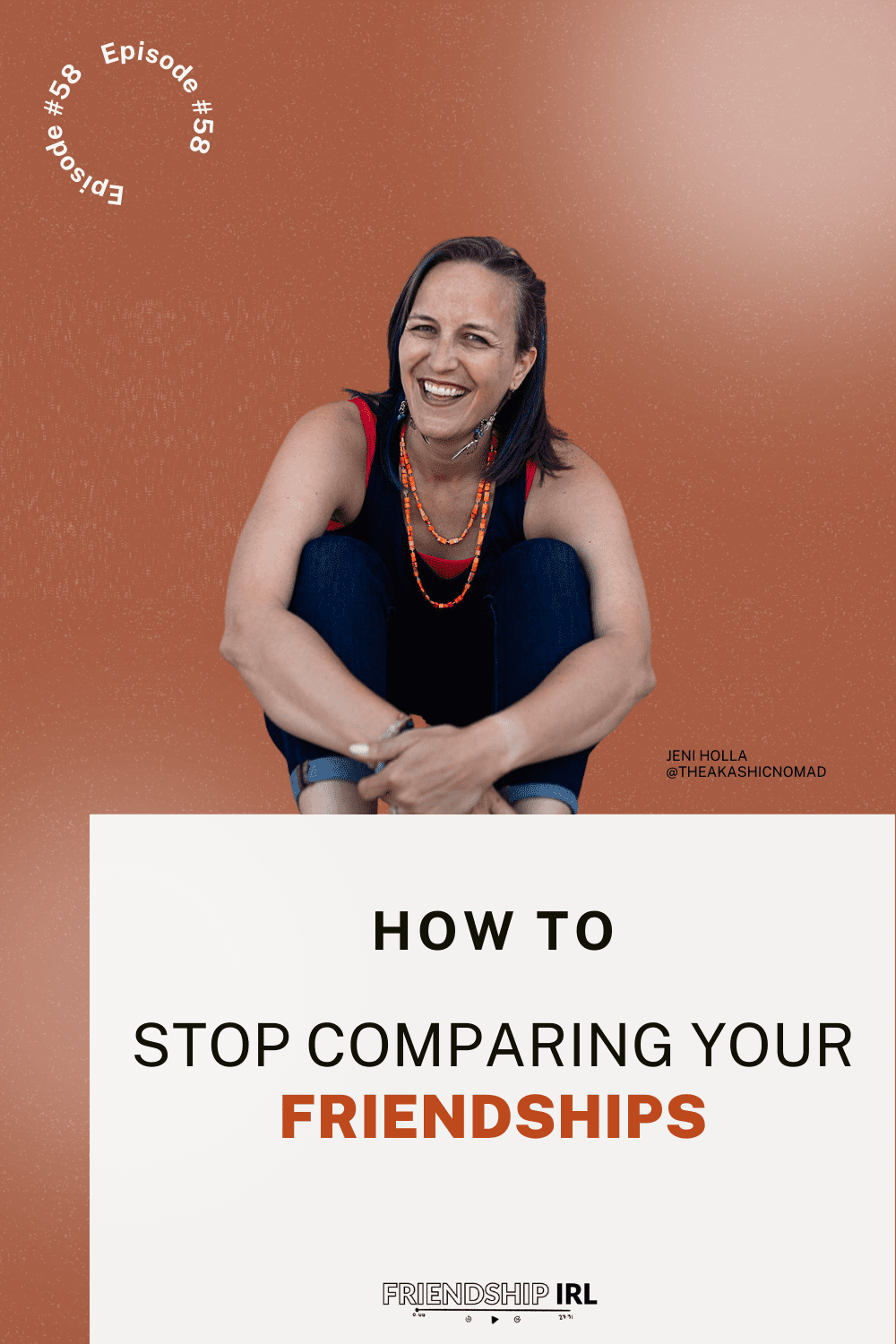
That’s the question Jeni Holla was asked recently by someone who wanted to be her friend. Someone who couldn’t understand why Jeni didn’t seem interested in building the kind of deep, ride-or-die friendship that society tells us we should all want.
When Jeni shared this story with me on episode 58 of Friendship IRL, I could hear the confusion and self-doubt in her voice. Here’s someone who travels the country with her husband, building community wherever they land. Someone who researches every new town, strikes up conversations with locals, joins volleyball leagues, and creates connections that span from Montana to Florida.
And yet she was questioning whether she was broken somehow. Whether she was doing friendship wrong.
Let me tell you something: she’s not. And if you’ve ever felt the same way, neither are you.
The Friendship Shame That’s Keeping You Small
Here’s the truth that no one wants to say out loud: a huge number of people have never had that mythical “best friend forever” relationship that movies and Instagram posts make seem essential to human happiness.
They’ve never had someone they’ve known since childhood who knows all their secrets and finishes their sentences. They’ve never had that person they can call at 3 AM who will drop everything to come over.
And because our culture has decided that THIS is what friendship should look like, they walk around carrying secret shame about it.
“I’ve never really had one of those, like Ride or Die friends,” Jeni told me, and I could feel the weight of judgment she’d been carrying. Not just from others, but from herself.
But here’s what I want you to understand: there is no moral compass to the way that your community and your connections look.
Read that again. There is no right way. There is no wrong way. There’s only what feels authentic and sustainable for YOU.
The Myth of the “Right” Way to Do Friendship
We’ve created this hierarchy in our culture where deep, lifelong friendships sit at the top like some golden trophy, and everything else (your work friends, your neighbor who you chat with over the fence, your volleyball teammates, the people you meet while traveling) gets dismissed as “just acquaintances.”
This is complete bullshit.
“Both are hard work,” I told Jeni when she was beating herself up about not wanting traditional close friendships. “We’ve just made one seem better than the other.”
Think about it: The traditional model requires you to find someone compatible, invest years getting to know them deeply, navigate life changes together, maintain consistent contact, and weather every storm as a team. That’s relationship-level work.
But what does Jeni do? Building community wherever she goes, researching new places, striking up conversations with strangers, joining activities, creating familiarity and belonging in every new town? That’s also incredibly hard work that most people are too scared or too lazy to do.
The difference is we celebrate one and dismiss the other.
What Community-Building Actually Looks Like
Let me paint you a picture of what Jeni’s approach actually entails, because I think most people have no idea how much intentional effort goes into building community:
When she arrives in a new place, she doesn’t just show up and hope for the best. She researches the area more thoroughly than most locals know their own town. She looks up the Chamber of Commerce website, reads local articles, and identifies the hidden gems between tourist spots and locals-only places.
She figures out the rhythms of different communities. In northern Idaho, she learned that all the locals gathered at the bar between 3:00 and 4:30 PM after work. She showed up consistently at that time, not because she needed drinks, but because she understood that’s how you build familiarity.
“I can find connections anywhere,” she explained. “But it’s fleeting.”
And you know what? That’s perfectly okay. Not every connection needs to last forever to have value.
The complete episode goes so much deeper into Jeni’s specific strategies for building community as a nomad, including how different places require different approaches and why small towns vs. big cities present totally different challenges. Her insights about finding third places and creating consistency will change how you think about building belonging anywhere.
The Hidden Value of Breadth Over Depth
Here’s what people don’t understand about the community-building approach: it provides something that even the closest friendships can’t always offer: variety, flexibility, and resilience.
Jeni gets social fulfillment from multiple sources. She has volleyball friends who share her love of the game. She has an entrepreneur friend she can talk business with. She has Bob in North Carolina, who’d probably help her with anything if she called, even though they only spent a few months as neighbors.
“I’m getting social fulfillment from other places,” she realized during our conversation. And that cumulative impact might be just as powerful as having four best friends.
When one source of connection isn’t available, maybe the volleyball league takes a break, or someone moves away, she doesn’t lose her entire support system. She has what I call a diversified friendship portfolio.
Plus, she’s developed a skill that serves her everywhere: the ability to create belonging wherever she goes. How many people do you know who could move to a new place every three months and consistently build community? That’s not a lesser skill… that’s a superpower.
The Permission You’ve Been Waiting For
About halfway through our conversation, something shifted for Jeni. I could literally hear it in her voice.
“I feel so liberated,” she said. “I think deep down, I knew I was doing this in the way that felt right to me.”
That’s the moment I live for. When someone realizes they’re not broken, they’re just different. When they understand that the way they naturally approach friendship isn’t wrong. It’s just not what gets celebrated in our culture.
So let me give you the same permission I gave Jeni:
You don’t have to want deep, lifelong friendships to be a good person. Some people thrive on having a small circle of ride-or-die friends. Others prefer a broader network of connections that serve different parts of their life. Both are valid. Both require work. Both have value.
You’re allowed to enjoy surface-level connections. Not every conversation needs to be deep and meaningful. Sometimes talking about your favorite TV show or comparing stroller configurations is exactly what you need. Those connections matter too.
You can prioritize community over intimacy. If you’d rather be the person who knows everyone at the coffee shop than the person who has one best friend’s phone number memorized, that’s your choice to make.
Your friendship style can change. Just because you prefer community-building now doesn’t mean you’ll never want closer friendships later. And vice versa. You’re allowed to evolve.
The Real Question You Should Be Asking
Instead of “Am I doing friendship right?” try asking: “Does this feel good to me right now?”
Jeni loves being the person who can strike up a conversation with anyone. She enjoys researching new places and finding ways to plug into communities quickly. She gets energy from having lots of different types of connections rather than maintaining a few intensive relationships.
That works for her life, her personality, and her current season. It might not work for her forever, and it definitely doesn’t work for everyone. But it works for her right now, and that’s what matters.
“I actually don’t mind the way that I currently have friendships,” she said by the end of our conversation. “I was maybe judging myself about things that I was afraid to admit what I already knew.”
The full episode captures this entire transformation (from self-doubt to self-acceptance) and includes so many more insights about different approaches to friendship, why the “length of friendship” question is problematic, and how to know when relationships have run their course. Jeni’s journey will resonate with anyone who’s ever felt like they don’t fit the traditional friendship mold.
Your Turn to Get Liberated
Here’s what I want you to do after reading this:
Take inventory of your current connections. Not just your “friends,” but everyone who adds value to your life. Your work friends, your neighbors, your workout buddies, the barista who knows your order. See the full picture of your social world.
Notice what you actually enjoy. Do you light up when meeting new people? Do you prefer group activities or one-on-one time? Do you like deep conversations or casual banter? There are no wrong answers.
Stop apologizing for your preferences. If someone asks why you don’t have a best friend, you don’t owe them an explanation. “I prefer having lots of different connections” is a complete sentence.
Trust your instincts. If the traditional friendship model doesn’t appeal to you, believe that feeling. If it does appeal to you, that’s equally valid. You get to choose.
The goal isn’t to have the “right” kind of friendships. The goal is to have the friendships that feel right to you.
As Jeni said at the end of our conversation, “I’m a better friend. I’m gonna give myself credit.”
You should, too.
Ready to hear the complete transformation from friendship shame to friendship confidence? Episode 58 dives deep into Jeni’s nomadic lifestyle, her specific community-building strategies, and the moment everything clicked about why her approach works perfectly for her life. Listen to the full conversation wherever you get your podcasts, because the journey from self-doubt to self-acceptance is something everyone needs to witness.