Have you ever left a hangout with someone you’ve known for years, someone you have so much history with, and felt… off? Not because anything blew up. Not because there was a fight. The hangout was mostly normal. You laughed at the same jokes. You talked about the same stuff. And yet.
There were maybe two moments. Small ones. A thing they said that made you stop mid-sentence in your own head. A value that surfaced that didn’t match the person you thought you knew. You went home, and you couldn’t shake it.
That feeling has a name. And you’re not crazy for having it.
Today’s episode is about a very specific kind of grief: the grief of watching someone you love become someone you don’t fully recognize, while the friendship is technically still intact. Nobody did anything wrong. Nobody blew anything up. The person is still sitting right across from you. And yet you’re mourning something.
You’re allowed to do that. This episode tells you why, and what to do with it.
The 95/5 Problem
95% of the hangout still feels completely familiar. And 5% of it just… doesn’t.
Fifty things happen that feel like the person you’ve always known. And then five things don’t line up. Something they said that surprised you. A value that surfaced out of nowhere. A way they showed up that felt off. And because most of it still feels normal, it’s easy to gaslight yourself. No, no. I’m being dramatic. It was fine.
But if it keeps happening, that 5% starts to accumulate. And at some point you look up and realize: I don’t fully know who this person is anymore.
The slow creep is the hardest part. If you hadn’t seen this friend in a year, you might walk up to them and immediately think, whoa, you are a completely different person. But when you see someone regularly, you’re catching the incremental shifts. You don’t get the before-and-after. You just get a slow, quiet accumulation of wait, what moments.
Why This Happens (And Why It Doesn’t Make Anyone a Bad Person)
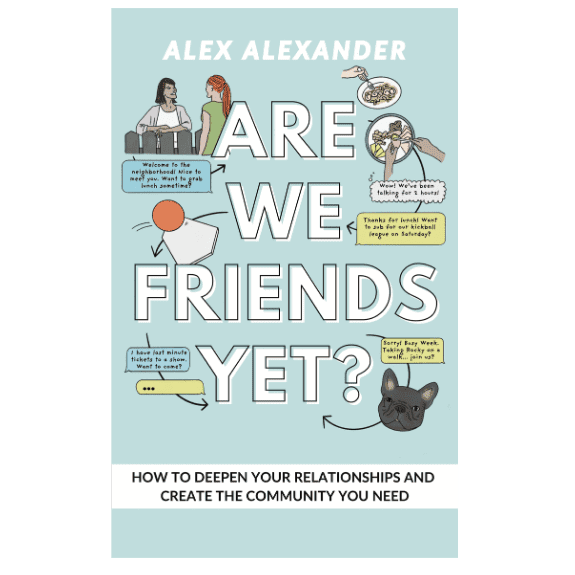
Roots change. If you’ve listened to Episode 12 or picked up a copy of Are We Friends Yet?, you already know the framework. Roots are what hold friendships together: shared experience roots, emotional intimacy roots, and story roots, which are the beliefs and expectations you hold about the friendship.
When you’ve been friends with someone for a long time, you’ve accumulated decades of roots. Some of them die and wither naturally. You and your college friend stopped going to frat parties. Now you do backyard barbecues and walk dates. That’s a normal root adjustment.
But sometimes what changes isn’t just how you spend time together. What changes is something more core. A value. A pattern of behavior. Something that feels like it’s moving in a direction you don’t recognize.
And that can come from anywhere. A friend who’s dealing with addiction or an abusive situation, and it’s making them say and do things that don’t match the person you’ve known. A friend who’s been spending time with a new group of work colleagues who are really into accumulating things, the big house, the boat, the more-more-more, and suddenly your friend is talking like that too. A friend who went and stayed somewhere for the summer and came back with an ideology that feels completely foreign.
None of these people are necessarily bad people. Something is happening in their life that is changing them. And you’re on the receiving end of it, watching it happen from the inside of a friendship that still has so many familiar roots.
That’s a specific kind of disorienting. And it deserves to be named.
You’re Allowed to Grieve This
I want to say this clearly: you are allowed to grieve a friend who is still sitting right across from you. And the first thing to do with that grief is stop pretending it isn’t there.
The loneliness of this specific experience is that it doesn’t look like a loss from the outside. The friendship is technically still there. Nobody broke up with anybody. Nobody did anything wrong. So there’s no obvious moment to point to, no clean narrative to tell people, no permission structure for the sadness you’re carrying.
But you are mourning a version of a person. That’s real. Sit with it. And then, when you’re ready, decide what to do next.
If you want to hear the specific examples I walk through in the full episode, including the friend who came back from a summer away with a completely different ideology and the friend who finally hit the career milestone they’d been chasing and lost their spark entirely, listen in.
Three Options for What to Do Next
Once you’ve sat with that grief for a moment, you do eventually have to decide what to do with the friendship. There are three directions you can go.
Option 1: A friendship demotion.
You don’t end the friendship. You just stop actively pursuing it in the way you once did. If this is someone you used to call every weekend, maybe it’s not every weekend anymore. Maybe you find ways to connect that feel a little more sustainable given what’s changed. Maybe you suggest doing something together in a more community setting: a run club, a group dinner, something where the hangout has a built-in structure and focus.
This is especially worth considering if you think your friend is struggling and you’re hoping they’ll find their way through it. You want to be available. You just can’t keep showing up to one-on-one hangouts that leave you feeling depleted and confused. A demotion keeps you in someone’s orbit without requiring you to absorb everything that’s changed. (I did an entire episode on friendship demotions. It’s Episode 45, linked in the show notes.)
Option 2: A friendship pause.
A temporary, intentional step back. I would only use this if you genuinely want to invest in this friendship long term but feel like the pattern you’re both stuck in needs a moment to reset.
I’ve done this with a friend. She was going through something really hard, and every single time we got together, that was pretty much all our hangout was. For about a year. And finally I had a direct conversation with her. I told her I felt like she was really struggling, that we had talked about it in so many ways, and that I thought she needed someone who could actually help her get out of the cycle, because I couldn’t do it, and it was draining our friendship. We set a date to reconnect. We gave the friendship some breathing room. That’s what a pause is. (Episode 136 goes deeper on this one.)
Option 3: Ending the friendship.
Sometimes the change is significant enough, harmful enough, that you decide this isn’t something you can continue. That is a valid choice. And it’s also allowed to be sad, even when it’s the right call. There’s no wrong answer here.
What to Do With the Loss
Whatever you choose, you’re going to spend some time mourning. And that’s appropriate. But instead of being entirely consumed by the loss, I want to offer one more thing to sit with.
Think about what you loved about this friendship before the shift. What did it give you? Was it the person you could call every day? The one friend in your life who completely understood a niche interest nobody else cared about? Someone who was always down for a random adventure and made you feel spontaneous? A standing Tuesday night pickleball game that gave you two hours a week to breathe?
Whatever that was, keep your eyes open for it.
Absolutely take time to mourn, especially if this was a decades-long friendship. But if you can get clear on what you’re actually missing, it becomes easier to spot it when it shows up somewhere new. When you’re talking to someone and they mention they love pickleball, you notice. When a friend of a friend turns out to share that niche interest nobody else in your life cares about, you pay attention. You’re way more likely to find what you’re looking for if you know what you’re looking for in the first place.
The full episode walks through all of this in much more depth, including the specific examples that I think will make you feel a lot less alone in this. If any of this is hitting close to home right now, fire up this episode.
A Note on the Wheel of Connection
One more thing. If you’re going through this and you’re realizing that what you’re losing is something really specific, a type of connection, a shared interest, a kind of presence in your life, the Wheel of Connection is where I’d point you next. It helps you see what you actually have, where the gaps are, and where you might want to add something new. I talk about it in Episode 100, and it’s also in the book. Both are linked in the show notes.
The goal here is to understand what you have, what you need, and then go build it.
I think every friendship is changing all the time. You don’t get to control all of it. There are two people in every friendship, and if the other person shifts, you’re on the receiving end of that. This episode is for the moments when you’re there, sitting across from someone you love, feeling the grief of something changing, and not quite having the words for it.
Now you do.
If you’ve ever left a hangout thinking is that who I’m friends with? and couldn’t shake it, go listen to the full episode.