Here’s a quote that stops me in my tracks every time I hear it:
“Show me your calendar and your bank account, and I’ll tell you what’s really important to you.”—Ramit Sethi
Ouch, right?
Because most of us would say our people are important to us. Our family. Our friends. Our partner. Our community. These are the relationships that matter most.
But when you actually look at where our time and money go? The story is often very different.
We say we want to see our friends more, but we don’t book the plane ticket. We say family matters, but we only visit for three days at Christmas. We say connection is important, but we’re too busy to call back.
We’re living on autopilot, following a script about how life “should” look, instead of designing a life that actually reflects what matters to us.
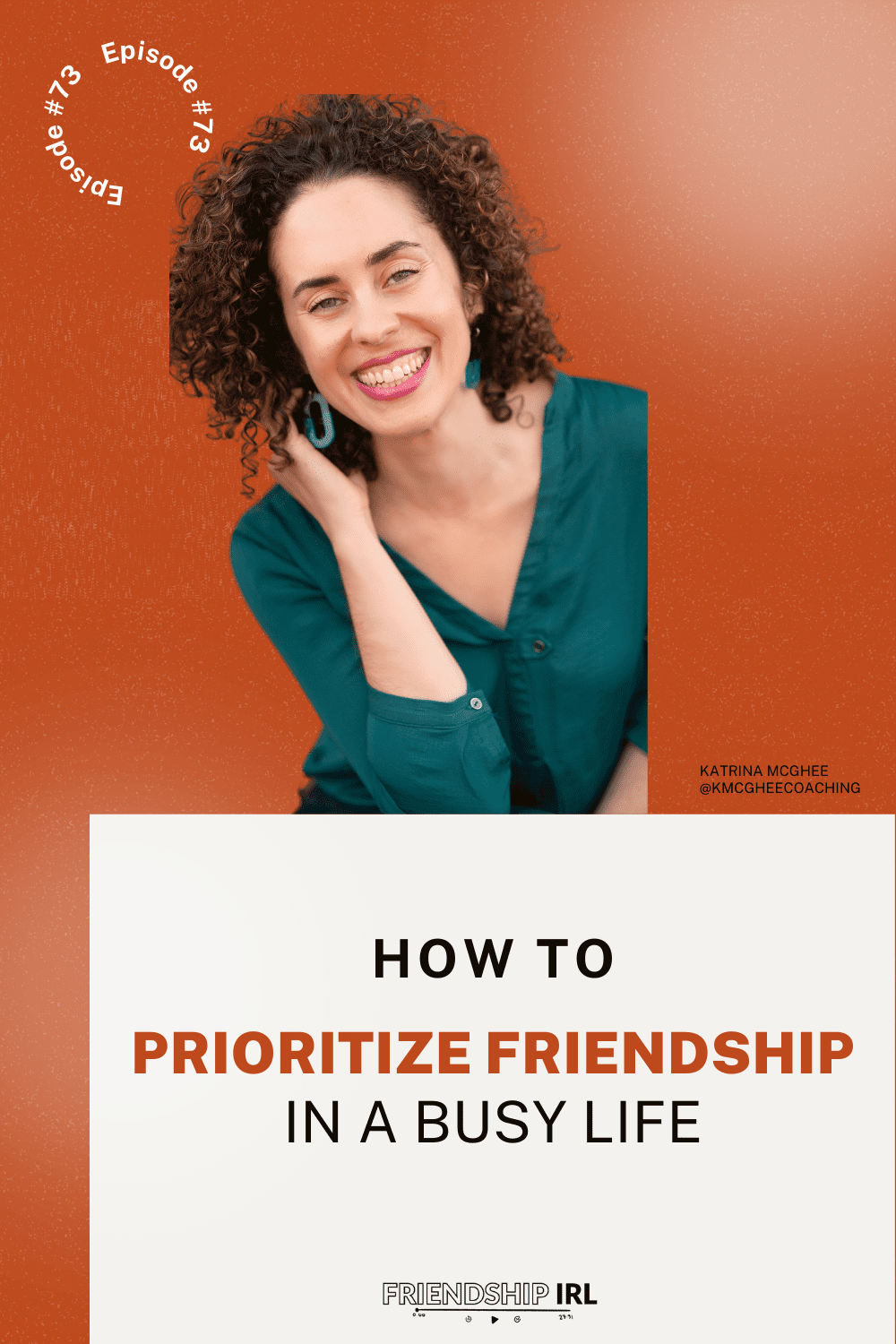
Today, I want to introduce you to someone who decided to get off autopilot. Her name is Katrina McGhee, and she took a 20-month career break to travel the world, but more importantly, to live life WITH the people who matter most to her.
And what she learned during those 20 months? It changed everything about how she values time, invests in relationships, and designs her life.
The 20-Month Break That Changed Everything
Let me give you the specifics of Katrina’s break, because the details matter here.
She didn’t work for 20 months. Not at all.
She saved $40,000 in 18 months while working her corporate job, and then she quit.
The first part of her break? A 3.5-month road trip through the US with her boyfriend at the time. Grand Canyon. Arches. White Sands. New cities. Great food. A big fat circle through America.
Then (and this is the part that made my heart swell) she went home for over two months to spend time with her family.
Not for a holiday. Not for a special occasion. Just… to be there. To live a regular life with them.
“Being able to be present for them when they were having regular life moments,” she told me, “instead of just the hustle and bustle of holidays, or trying to cram it all in in this very unnatural three-day, five-day, seven-day period.”
After that, she traveled internationally… slowly. Sometimes staying in one city for a month, like when she rented an Airbnb in Argentina, just to get the flavor of the place, to really know it in an intimate way.
And when she was done traveling? She moved to Denver and lived with one of her best friends for 4-5 months. A friend she used to visit once a year, but had never lived with.
She spent 20 months living WITH her people, rather than just catching up on what she’d missed.
And it fundamentally changed how she thinks about connection, time, and what it means to really know someone.
The Difference Between “Special Guest” and “Real Life”
Here’s something Katrina said that I can’t stop thinking about:
“When you come in for those two days, the seven days, you’re the special guest. We’re doing unnatural things, we’re shifting time around, we’re putting a lot of energy into celebrating your existence, but in a kind of unnatural way. It’s fun, but real life happens in between those really big moments.”
She described sitting on the couch with her family watching TV after dinner, not doing anything special, just being together in the same room. Having little conversations. Asking someone how their day went and actually listening.
“It’s not the highlight reel of the last six months or the last 12 months that you’ve missed,” she explained. “It’s like these little moments that are going to add up to be the story of my life.”
Think about that for a second.
When you only see someone for a few days at a time, you’re getting the highlight reel. The big updates. The three things they need to tell you about the last year.
But the actual texture of someone’s life? The small moments that define their days? The inside jokes that develop from repeated experiences? The way they actually live?
You miss all of that when you’re just the special guest.
Katrina talked about baking with her mom, not making an amazing Thanksgiving dinner, just trying a new gluten-free recipe because it was fun. Playing board games. Taking walks. Being there for the office drama, the friend situations, and the tiny decisions that make up a life.
“When you’re slowing down, you actually get to know the people in their lives beyond just the names and the faces and the ages,” she said.
And here’s what really got me: She talked about her friends’ kids. Most of her friends have children, and she knows their names and ages. But she doesn’t actually KNOW them. She doesn’t have memories with them.
“This is a really huge part of my friends’ lives,” she acknowledged. “And when I’m slowing down, I actually get to know the people in their life.”
In the full episode, Katrina shares so many beautiful examples of these small moments, including a hilarious story about one of her friend’s teenage sons farting in the car that became an inside joke they still reference. If you’re wondering what the difference really feels like between “catching up” and “living life together,” this conversation will show you exactly what I mean.
When She Moved In With Her Best Friend
Okay, this part of Katrina’s story is my favorite.
After all her travels, she decided to move to Denver. And her best friend (someone she used to visit once a year) offered her the basement apartment in her house.
So Katrina moved in. For 4-5 months.
“It was the most magical thing,” she told me. “I was there for so many small moments. If she went on a date, when she was going through fertility stuff… just being there and not having to be there like she had to pick up the phone and call me and explain it.”
Instead, her friend could just come home from a hard day, and Katrina would come upstairs for a glass of water and ask, “Girl, how was your day?”
No effort required. No decision about whether to reach out. No choosing who to tell. Just… presence.
They sat on the porch together on Halloween, all three of them (Katrina, her friend, and Katrina’s boyfriend), handing out candy to kids in witches’ hats.
“Talk about filling your cup,” Katrina said. “We made memories that will last a lifetime.”
But beyond the fun memories, there’s something profound about being there for someone without them having to manage your presence. About showing up in your kitchen and just… being available for whatever comes up.
“It might feel a little bit too weird or too hard to go through all the effort to call a friend or go out to eat or get dressed up to have coffee to tell it,” Katrina explained. “But when you’re in the same house? It’s just two people in the kitchen being like, ‘You’re not going to believe what happened to me.’ And it’s that easy.”
What We’re All Actually Craving (The 90% Statistic)
Here’s something that’s going to blow your mind:
Katrina is now a career break coach. She helps people plan and take breaks lasting anywhere from two months to two years. She has a process with prompts that help identify someone’s purpose statement and their four main themes, or “pillars,” for their break.
I asked her: How often is connection one of those pillars?
“90% of the time.”
NINETY PERCENT.
Let me say that again: 90% of people who come to Katrina seeking a career break list connection as one of their main reasons.
“It might be quality time with loved ones,” she explained. “It might be community (belonging to a collective). But some version of connection is one of the pillars 90% of the time.”
Sometimes it’s because someone is sick and they want to invest in that relationship while they can. But often, it’s just because people feel like their job has stolen all their free time, space, energy, and mental load from the relationships that matter most.
“As humans, connection is important,” Katrina said simply.
And yet (here’s the painful part) we’ve built a society where connection consistently falls to the bottom of our priority list.
The Data That Proves We’re All Struggling
There’s a study called the American Time Use Survey that tracks how much time we spend with different groups of people throughout our lives.
When you look at the visuals, they’re kind of shocking.
Coworkers: High during prime working years, then drops off after retirement.
Partners: Jumps up when you meet someone, stays pretty high.
Kids: Shoots near the top when you have them, drops as they get older and move out.
Friends: Increases in your teens and 20s. But when you hit your 30s? There’s a pretty steady decline. Friends drop to the bottom of the chart, where they stay for the rest of your life.
Read that again. Friends drop to the bottom and stay there for the rest of your life.
This isn’t because we stop caring about our friends. It’s because we’re on autopilot, following a script about what we “should” be prioritizing at each life stage.
Career in your 20s and 30s. Partner and kids in your 30s and 40s. Maybe some hobbies in your 50s and 60s.
Friendship? That’s something you had time for when you were younger. Now you’re too busy being an adult.
Except we’re not actually too busy. We’re just prioritizing other things.
And then we wonder why we feel lonely. Why do we feel disconnected? Why we look around and realize we don’t actually know our friends’ lives anymore; just their highlight reels.
The full episode includes more about this data and what it means for how we’re living our lives. We also talk about my personal goal to disrupt this chart: renting an apartment in a world city for three months and inviting friends to visit for extended stays. If you’re thinking “but HOW do I actually change these patterns,” the conversation will give you both inspiration and practical ideas.
What Living Life Together Actually Looks Like
Let me give you some examples of what this looks like in practice, because I think it’s easy to hear “live life together” and not really understand what that means.
Katrina’s 5 am coffee runs: Her friends in Seattle own an espresso shop. On Saturdays, the wife (who works a corporate job) gets up early and drives her husband to Pike Place Market because parking is impossible. He makes her a cappuccino before she leaves.
Katrina got her ass up at 5 am to be part of this routine. Sat in the car half asleep. Watched this small ritual that defines their Saturdays. Then went to the grocery store at 6 am because that’s what her friend does.
“To just know life with people, like to really know life,” she said. “They get to know you, too. Those people are so dear to me. They feel like family. And it’s largely because of my lifestyle: having spent these week-long savors with them.”
My 5-7 day visits: I do something similar with friends who live far away. Instead of flying in for a weekend, we go for 5-7 days. We work while we’re there (finding co-working spaces or leaving during their work hours). But we come home for dinner at their table. We do preschool pickup. We run errands together. We attend random family birthday parties because that’s just what’s happening that weekend.
One of my favorite memories is with our friends in Phoenix. We were there for a week, and their cousin was having a birthday party. We got to meet their whole extended family, see them in that context, and make new connections ourselves.
That’s what you miss with a 2-day visit. You get the curated experience. But you don’t get the texture of their actual life.
The Keurig story: When our friend Mike lived with us during a transitional period, he brought his beat-up, barely functioning Keurig. I was baffled by this machine for a solid month. It looked like it needed to be thrown away.
When he moved out and started dating his now-girlfriend (who’s become a dear friend), I made a comment about the Keurig. She immediately said, “Oh my gosh, somebody else who gets it! I’ve been wanting to throw that thing in the trash. I’m buying him a new one.”
That’s the kind of detail you only know when you live life together. The inside jokes. The quirks. The small things that define someone’s daily existence.
But What If You Can’t Take A 20-Month Break?
Okay, I hear you. Most of us can’t just quit our jobs for 20 months and travel the world.
Katrina acknowledges this. She talks openly about the privilege and flexibility required for what she did.
But here’s what I want you to hear: This episode isn’t just about taking massive career breaks. It’s about getting off autopilot and making intentional choices that align with what you say matters to you.
And there are SO many ways to do that, even if you can’t take a 20-month break.
Start With A Time Audit
Here’s an exercise I learned from psychologist Cassie Holmes on the Hidden Brain podcast:
Track your time for a week (or two if you want more data). Write down in as much detail as possible what you’re doing. Commuting, sleeping, hygiene, cooking, scrolling, working out, watching TV… everything.
Then rate each activity on a scale of 1-10: How much joy or fulfillment does this bring you?
Are the activities that take up the most time the most fulfilling?
I get that not everything can be fulfilling; we all have responsibilities. But there are probably activities in there that are taking up way more time than you realized and bringing you very little joy.
The goal is to identify where you can shift even small pockets of time toward activities that actually fulfill you, including connection.
Get Creative With The Time You Have
Katrina shared some great ideas for people with traditional corporate jobs:
Take a long weekend. Leave on a Thursday, come back on a Monday. You’ve used one vacation day but gotten four days with your people.
Add days to work trips. If you’re traveling for work anyway, can you extend it a day or two to see friends in that city?
Meet in the middle. Can’t both travel to each other? Pick a city between you and meet there for a weekend.
Leverage your PTO strategically. Instead of spreading it thin across the year, could you cluster some days to create a longer chunk of time with people who matter?
The point isn’t that everyone needs to quit their job and travel for 20 months. The point is to stop defaulting to “I’m too busy” and start getting creative about carving out time for what actually matters.
My Personal Goal (And Why I’m Sharing It)
I want to share something vulnerable with you.
Michael and I met when we were 20. So on that Time Use Survey chart, my “partner” line jumped up about a decade earlier than average.
I don’t regret that at all. But there’s something I do wish I’d done more of in my 20s: traveled with friends. Lived in a big world city: New York, London, Paris.
So I have this goal: I want to rent an apartment in one of those cities for three months and tell my friends they’re welcome to visit. For a few days, a week, two weeks, a month, if they want.
When I tell people this, they often ask: “What about Michael?”
And here’s my answer: Michael is welcome to visit too! But we met when we were 20. If we’re together until we’re in our 80s (which I hope we are), that’s 60+ years. His line on my chart is already SO HIGH.
I’m talking about carving out three months to bump up some other people who really matter to me. People I currently might see for a few days a year. Three months could double, triple, or quadruple the time I’d otherwise spend with them.
I think that’s really cool. And I think it’s worth building toward, even if it takes years to make it happen.
What We Lost (And What We Can Reclaim)
Katrina spent several months in Cuba, and the experience showed her something profound about what we’ve lost in how we live.
In Cuba, Wi-Fi is scarce and complicated. Most people just don’t use it much. And what Katrina noticed was how different connection felt there.
“People would just stop by the house and ring the doorbell or knock on the door without calling, without setting anything up,” she told me. “Because literally, connection is what they have there. It’s each other.”
People would come in and sit down for an hour. Just talking. Making a beverage. Hanging out.
Or you’d go visit other family and friends, not calling ahead, just knocking on doors.
If you needed yogurt (which was apparently on the black market), you’d go to “the yogurt house” and hang out with the yogurt guy while you got your yogurt.
“It was so crazy, the feeling,” Katrina said. “But then I remembered back to my childhood. I’m turning 44, and I was like, oh my god, this is actually what life was like when I was eight.”
Her parents’ friends would just stop by the house. Or they’d get in the car and go visit someone, assuming they’d be home, and if not, they’d leave a note and do something else.
That’s how we used to live. And somehow, we’ve convinced ourselves that the new way (where we need to schedule everything three weeks in advance and limit it to exactly 90 minutes) is better.
It’s not better. It’s just what we’ve gotten used to.
And the beautiful thing is: We can choose differently.
We can knock on our neighbor’s door (even though it feels foreign now). We can show up at our friend’s house without a formal invitation. We can say yes to spontaneous plans. We can prioritize being present over being productive.
We can get off autopilot.
The Slow Build (Because This Doesn’t Happen Overnight)
Here’s something important I want you to hear:
Michael and I have been together for 14.5 years. And connection being a huge priority in our lives? That’s been a slow build.
We come back to this month after month, year after year. We’re always trying to squeeze out a little more time, prioritize it a little more, and use our resources a little more intentionally.
The things I’m able to do now (the 5-7 day visits, the flexibility to work from anywhere, the willingness to have friends live with us) none of that happened overnight.
Ten years ago, we couldn’t do what we do now. And ten years from now, I hope we’ll have even more capacity to prioritize connection in bigger ways.
If you’re listening to this and thinking, “I can barely survive right now, there’s no way I can do any of this” — I see you. I’m not asking you to overhaul your entire life tomorrow.
I’m asking you to start noticing where you’re on autopilot. And to consider making one small shift toward what you say actually matters to you.
Maybe that’s:
- ▪️ Saying yes to one spontaneous plan this month instead of defaulting to “I’m too busy.”
- ▪️ Booking a slightly longer visit with a friend instead of the usual quick weekend
- ▪️ Inviting someone to do errands with you instead of doing them alone
- ▪️ Asking a friend in a transitional period if they want to stay with you for a while
- ▪️ Taking that long weekend to visit someone who matters
Small shifts compound over time. And eventually, you look up and realize you’ve built a life that actually reflects what you say is important to you.
What’s Really At Stake Here
Here’s what I think about when I consider this stuff:
We’re building our lives right now. The choices we make today are creating the reality we’ll live in for decades.
If you keep defaulting to “I’m too busy” for your friendships, what does your life look like in 10 years? 20 years? 40 years?
That Time Use Survey shows that friendships decline after 30 and stay at the bottom of the chart for the rest of your life. But that’s only true if we accept it as inevitable.
What if we decided to disrupt that chart? What if we made different choices?
What if, instead of waking up at 50 feeling burnt out and disconnected and needing to blow up our entire life to start over, we made small shifts now that keep us connected to what matters?
This isn’t just about having more fun or seeing your friends more (though those are great reasons). This is about building a life you don’t need to escape from.
And connection (real, deep, lived-life-together connection) is a huge part of that.
The Permission You Didn’t Know You Needed
I want to close with this:
You have permission to design your life differently from the script that says you should.
You have permission to:
- ▪️ Take a career break (even if it’s “not the right time”)
- ▪️ Visit friends for a week instead of a weekend
- ▪️ Move somewhere specifically to be near your people
- ▪️ Let a friend live with you during a transition
- ▪️ Prioritize connection over career advancement
- ▪️ Spend money on plane tickets to see friends instead of buying more stuff
- ▪️ Use your vacation days for friend time, not just family obligations
- ▪️ Say “this matters to me” and actually mean it with your calendar and bank account
The script says: Build your career. Find a partner. Have kids. Maybe see your friends at the holidays if you have time.
But you don’t have to follow that script.
You can decide that living life WITH your people (really knowing them, making memories in the mundane moments, being present for the small stuff) is worth rearranging your entire life for.
Katrina did. And it changed everything.
“The connection I was able to experience because of that break really changed how I view time, how I value my time, and how I invest it in the people and relationships that matter to me,” she told me.
Maybe you can’t take a 20-month break right now. But you can start making different choices. Small ones that compound over time.
Because at the end of the day, what’s the point of building a successful life if you’re building it alone?
Ready to hear the full conversation about prioritizing connection and living life with your people? Listen to my episode with Katrina McGhee on the Friendship IRL podcast, and make sure to subscribe so you don’t miss future conversations. You can also check out Katrina’s book, “Taking A Career Break For Dummies,” (affiliate link) and learn more about her work as a career break coach.